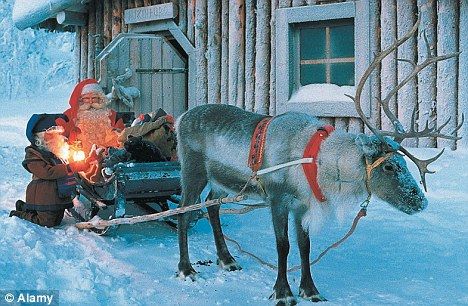
Look out, Rudolph!

UK supermarket Lidl is under fire for stocking reindeer meat and is accused of destroying the magic of Christmas.

Story includes a recipe for reindeer stew if you're interested.

Source

Operation Blankets of Love

By Julia Williams

I first heard about the wonderful non-profit charity called Operation Blankets of Love (OBOL) while watching an episode of Pit Boss on Animal Planet. I’ve since learned a little more about them and wanted to share with you what they do. Why? Because Operation Blankets of Love is a lifesaver (literally) for shelter animals in need, and they have inspired me to help too.

Imagine being a shelter dog and having to lie on the hard, cold cement floors, or a shelter cat stuck in a steel cage with nothing soft to lie upon. It’s an uncomfortable existence to say the least, and one no creature should ever have to endure. Yet many of our nation’s homeless animals do have to endure it, because shelters go through thousands of blankets and towels every month, and rely on donations to replenish their supply.

This is where Operation Blankets of Love comes in – since their inception in January of 2008, they have collected and distributed more than 200,000 blankets, comforters, towels and other soft bedding to Southern California homeless pets in shelters, rescue groups, sanctuaries, and foster groups. OBOL is a great help to cash-strapped shelters to be sure, but let me tell you how they save lives too.

While it’s obvious that lying on a blanket instead of a cold cement floor would be much warmer and cozier for the animal, it actually goes a lot deeper. Studies have shown that when shelter animals are given blankets and comforters, their behavior changes dramatically. Instead of cowering in a corner or lying there depressed and dejected, they perk up, wag their tails and engage with potential adopters.

Having soft bedding makes the shelter dogs and cats more relaxed and they feel happier, safer and more secure. This is critical, because being calm and comfortable in a more home-like setting increases an animal’s chances of being adopted! The blankets also provide immense relief to older, arthritic animals who might otherwise have to lie on a cold floor. Puppies and kittens have soft bedding to snuggle into, and the soft blankets soothe sick or injured animals, which helps them recover faster.

Now that you can see how a simple blanket can make such a big difference to a homeless pet, don’t you want to be a lifesaver too? I know I sure do. Operation Blankets of Love helps the homeless pets in California, but you can do something similar where you live. It can be as simple as donating bedding items to your local shelter, or you can take it a step further and host a “blanket drive” at work, school, social club, the pet store or your child’s next birthday party. You can be the inspiration other animal lovers need to step forward, and together you can make shelter animals more comfortable and help to save their lives too!

More about Operation Blankets of Love

OBOL works with more than 512 rescue groups and 30 City and County animal shelters in California. OBOL conducts pet education programs for grades K—12, youth and civic groups. They also coordinate unique pet adoption events to help shelter animals find their forever homes as well as provide a venue for collecting blankets and other comfort items. As an Emergency Response team, OBOL partners with the Red Cross and other organizations to help animals displaced by natural disasters. OBOL exists in part because “every day is a disaster for a homeless pet.”

I’m so glad to know that organizations such as Operation Blankets of Love exist, and plan to join them in helping to save lives by making shelter dogs and cats more comfortable.


Photo: Tess, by Susan Kers

Read more articles by Julia Williams

New Freebie!

Created for Digital Scrapbook Artist2, this *.pack file contains a full alphabet (including numbers and punctuation) in a very pretty gold glitter script.  Very fancy, and perfect for your holiday scrapping!


Once downloaded (it will download as a *.pack file), just copy it into wherever you store your DSA2 digikits and it should show up automatically next time you run DSA2!

Have fun and I hope you enjoy it!

Thanksgiving Hazards for Household Pets

By Suzanne Alicie

Thanksgiving is coming up soon. We all know what that means – indulging in all kinds of traditional foods and desserts, visiting with family, and enjoying the blessings of all we have. As enjoyable as Thanksgiving is for humans, the holiday offers many dangers for our household pets. As a responsible pet owner, there are things you should watch out for with dogs and cats in the house on Thanksgiving.

The following items are hazards that could cause you to end up spending the holiday evening at the vet’s office or the emergency pet hospital instead of watching the football game with your family.

1. Many Thanksgiving foods are bad for your pets. The main foods to make sure your pets don’t eat are turkey and turkey bones. Turkey contains L-Tryptophan which is known to induce sleeping. Because of the size of your pets’ body this can lead to listlessness and lethargy. The real danger is in the turkey bones, which can cause intestinal obstructions, punctures, tears and internal bleeding. Turkey bones, like most other poultry bones, splinter and have jagged edges. For more information, read Foods You Should Never Feed Your Dog.

2. Guests and pets don’t always mix well. If there are small children who may upset your pet in their excitement, or guests who may be allergic or just not “pet people,” keeping your pet confined away from the guests is probably the best choice for the day. Many times even calm and friendly pets get a little nervous when the house is full of people and children. The noise and activity could lead to a scratching, hissing cat or a snapping and growling dog.

3. The kitchen can be dangerous place for your pet to be, with hot dishes everywhere and people bustling around to get the Thanksgiving dinner on the table. Pets in a busy kitchen can get accidentally stepped on and tripped over. Again, confining your pet in another room for the day is the best choice for his health and the safety of the people in the kitchen.

4. If you have to sequester your pets for the day, they may be feeling a little left out. Give them something special by providing a healthy treat such as CANIDAE Snap-Bits™ as you visit them throughout the day. You could even prepare a small Thanksgiving treat for your pet, making sure to avoid the dangerous foods that you have on the table. Avoid fat trimmings and foods that pets shouldn’t eat, and don’t go overboard. A few bites is plenty and won’t cause stomach upset.

Keep both your pets and your guests safe and healthy through the holiday season by practicing common sense and doing everything you can to ensure your pet’s comfort during this time. The upheaval of being confined, of lots of different smells and voices in the house and not being able to have their normal routine can cause your pet to act out, or feel resentment. Be sure to praise your pet when they’re behaving, and visit with them often throughout the day.

No matter how many guests you have, your pet is also a family member and doesn’t understand what Thanksgiving is. Imagine how you’d feel if your spouse locked you in a bedroom and disappeared for the whole day, while you could smell wonderful foods and hear people talking and laughing. You wouldn’t be very happy, and that is about how your pet would feel too. Simply appearing to visit with them and pet them for a few moments throughout the day will reassure them. 

Read more articles by Suzanne Alicie

The pup after Merle

While Merle gave us lessons from a freethinking dog, Pukka is here to teach us all about the ups and downs of being a puppy...and there's something very real we can all take away from that. I was recently sent a copy of Pukka, The Pup after Merle by Ted Kerasote, author of Merle's Door. The book is big, hardcover with more than two hundred beautiful photographs. The story shares the tale of how the young yellow lab comes into Ted's life, learns some hard lessons, overcomes fears, and basically loves life.

Q& A with Ted Kerasote:
What was it like to write the book from Pukka’s point of view?
I didn’t really write the book from Pukka’s point of view. As was the case in Merle’s Door, I watched my dog, I spoke with him, and I translated what he was telling me. It really is Pukka’s book.

How would you explain your philosophy of raising a puppy?
A lot of puppy-training manuals are all about confining the pup...Pukka had the run of the house and, yes, made a few mistakes...At the same time, pups, like children, need to learn manners—sitting, not bothering people, coming when called. But if these are made fun, and there’s some elk jerky and praise when it’s done right, the pup soon learns. My attitude is not to get too bent out of shape, and you and your puppy will be happier for it.

What have you and Pukka learned from each other?
I learned that one of the things I liked doing—running rivers—was not a great idea for a young, active pup. He wanted to be moving, to be roaming, and being confined to a raft was so borrrrrrrrrring! Pukka has learned from me that just because other dogs can do certain things—bark at the UPS man, for instance—that doesn’t mean he can. This has been a point of contention between us, he saying, “Why can’t I bark? All my friends are barking!” People who wring their hands over the company their children keep will understand this very well.

My review:
Pukka is the Hindi word for "genuine" or "first class." Little Pukka is selected, in part, because his face resembles Merle's. Pukka shares much of Merle's philosophy too, such as collars are itchy, and retrieving gets boring after the first few times.

As we read Pukka, we come to discover the story of a partnership between dog and human. We see how Ted teaches Pukka the rules (no dogs in the kitchen, no begging for food) but also allows Pukka to explore and take the lead in living his own life. I felt a deep respect between the two. The words are sparse, letting the beautiful photographs tell the story. I cringed at the photo of Pukka's poor injured eye after neighbor dog AJ took a bite. I laughed at the pictures of Pukka going down the slide. I awwwwed at the picture of Pukka under Merle's aspen tree. Best of all were the photos of Pukka in the beautiful Wyoming wilderness that Ted loves so much. In some shots, Pukka looked afraid on the kayaks and watercraft. Then there were times when it looked as if he'd conquered his fear. Then came a gorgeous photo of Pukka from the top of craggy Jackson Peak. That was as if he'd conquered the world.

I hope you run out and get a copy of Pukka, the Pup after Merle. There's nothing like a little puppy love to make you feel good.

Author Bio
Ted Kerasote is the author of many books, including the national best-seller Merle's Door: Lessons from a Freethinking Dog and Out There, which won the National Outdoor Book Award. His essays and photographs have appeared in Audubon, Geo, Outside, Science, the New York Times, and more than sixty other periodicals. This is Pukka's first book. Ted and Pukka live in Wyoming.