Saving lives with venom

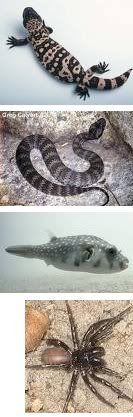
There are thousands of venomous animal species on Earth. Just a few of the most lethal are the Gila monster, the death adder, the fugu puffer fish and the Sydney funnel web spider.

Medical researchers are finding a positive side to these dangerous creatures: the complex and highly sophisticated poisons produced by these creatures have components that might save lives rather than kill.

The PBS show, Nature, Victims of Venom, illustrates how some of the animals we fear most may one day soon be helping us solve or alleviate a wide range of life-threatening medical problems.

Venomous animals use their toxins to capture prey or defend themselves. They inflict their poisons by biting, stinging, and, in the case of some marine animals, by emitting venom into the water so it can be absorbed through the skin. The venom itself typically comprises many different substances that have various effects on their victims.

The film introduces us to carefully trained researchers around the world who are risking harm - even death - to themselves by "milking" the venom of live animals so that the various components of these poisons can be studied in great detail and better understood, perhaps preparing the way for clinical trials against a variety of diseases and medical conditions. It's not only a dangerous job but a laborious one, since only tiny amounts of venom can be extracted at a time.

Heart disease, stroke, various cancers, and the management of chronic and severe pain are other potential targets of the chemicals that comprise venom.
Komodo Dragon's Deadly Bite

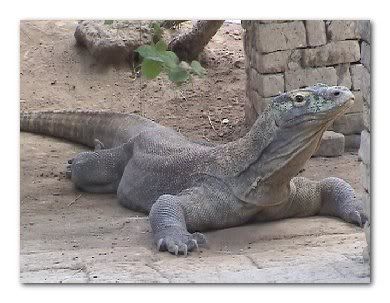
Komodo dragons may have a wimpy bite for their size, but somehow the giant lizards manage to take down prey as large as water buffalos.

A new study reveals that a few dozen razor-sharp teeth combined with beefy neck muscles make up for the reptile's dainty chomp.

The Komodo displays a unique hold-and-pull feeding technique. The lizard nabs prey with 60 perilous teeth, although its bite is weak. To make up for the lack of biting power, strong throat muscles drag the meal through the razor-sharp jowls and into the stomach.

Once a Komodo dragon maims its prey, which can weigh nearly as much as the lizard, it is swallowed whole and later regurgitated in a foul-smelling pellet of hair, bone and other indigestible remains. The lizards are also known for their infectious bites and parthenogenesis, or the ability to reproduce without mating.

Source: Yahoo News

Art by Christine Merrill


"Nevil, Ruby and Reginald" oil on canvas

Feline CSI

This is Mary.

Mary has a problem: the hair around her rectum is missing. That area is very pink and a little bloody, but not swollen.

What's wrong with Mary?

Read Cat Care, Breeds and Resources Blog for the answer.

Not welcome in Chicago

A cougar ran loose in Chicago on Monday for the first time since the city's founding in the 19th Century. But by day's end, the animal lay dead in a back alley on the North Side, shot by police who said they feared it was turning to attack.

No one knew where the 5-foot long, 150-pound cat came from, though on Saturday Wilmette police had received four reports of a cougar roaming that suburb, roughly 15 miles from the site of Monday's shooting.

Source: Chicago Tribune