Animal-Human Leprosy Link Found
People infected with leprosy in the United States often have the same previously unknown strain of the microbe Mycobacterium leprae that is also carried by armadillos.
Elderly Animals - in pictures
Photographer Isa Leshko has set out to document old age in the animal kingdom with a series of beautiful photographs.
10 Amazing Zoos Every Animal Lover Should See
Instead of going back to your local zoo again and again, why not see what else the world has to offer? Here are 10 amazing zoos every animal lover should see.
Showing posts with label health. Show all posts
Showing posts with label health. Show all posts
Hairballs!
Friday, April 29, is National Hair ball Awareness Day!
What better way to spread the word than by coughing up a virtual hairball on all your Facebook friends?
If you’re a cat owner, you’ve surely fallen victim to a hairball attack. There’s nothing worse than discovering that little present from your pet in the middle of the night in your bare feet. National Hairball Awareness Day provides a platform for highlighting this issue and educating cat owners of the solutions Science Diet offers.
You can help spread the word for Hill's Hairball Control products by playing and passing on Hill’s Pet Nutrition’s very first Facebook game—Hairball Battle!

Playing the game is simple. Choose one of the hilarious hairballs and cough them up on your friends! But watch out, they’ll be able to retaliate! Silly, sloppy and a bit disgusting—it’s the most fun friends of felines can have without leaving Facebook!
Play the game by clicking the Battle link below. Then fight to the yucky finish. Watch your step!
http://apps.facebook.com/hairball_battle
P.S. Dog lovers, don’t be shy—you can play, too!
Seriously, if you would like more information about hairballs and hairball control, please visit Hill's® Science Diet® Hairball Control Formulas.
What better way to spread the word than by coughing up a virtual hairball on all your Facebook friends?
If you’re a cat owner, you’ve surely fallen victim to a hairball attack. There’s nothing worse than discovering that little present from your pet in the middle of the night in your bare feet. National Hairball Awareness Day provides a platform for highlighting this issue and educating cat owners of the solutions Science Diet offers.
You can help spread the word for Hill's Hairball Control products by playing and passing on Hill’s Pet Nutrition’s very first Facebook game—Hairball Battle!
Playing the game is simple. Choose one of the hilarious hairballs and cough them up on your friends! But watch out, they’ll be able to retaliate! Silly, sloppy and a bit disgusting—it’s the most fun friends of felines can have without leaving Facebook!
Play the game by clicking the Battle link below. Then fight to the yucky finish. Watch your step!
http://apps.facebook.com/hairball_battle
P.S. Dog lovers, don’t be shy—you can play, too!
Seriously, if you would like more information about hairballs and hairball control, please visit Hill's® Science Diet® Hairball Control Formulas.
'Naked' penguins have scientists perplexed
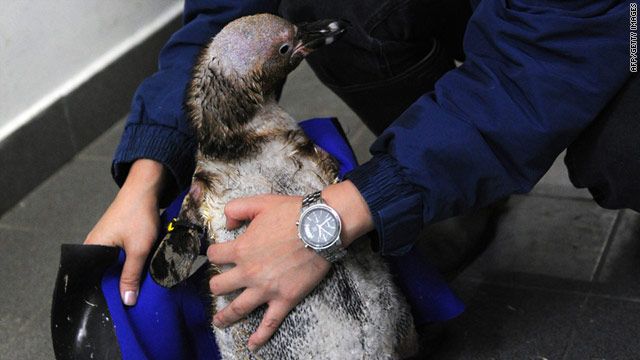
A mysterious ailment is causing penguins to lose their feathers, according to researchers at the Wildlife Conservation Society.
The condition, called feather-loss disorder, has been seen in penguin chicks in both sides of the Atlantic Ocean the past few years and is featured in a recent edition of the journal "Waterbirds," the release said.
While scientists don't know what could cause a penguin to go "naked," possible culprits include genetics, nutrient imbalances, thyroid disorders or pathogens.
“We need to conduct further study to determine the cause of the disorder and if this is in fact spreading to other penguin species,” Dee Boersma, who has studied Magellanic penguins, said in the release.
Read more ...
Shar-Pei dogs shed light on human Fever Syndromes
 The gene mutation responsible for the wrinkled skin of Shar-Pei dogs is also linked to a periodic fever disorder, a finding that could have important implications for human health, researchers report.
Shar-Pei dogs have a high prevalence of a periodic fever disorder that is similar to inherited autoinflammatory periodic fever syndromes in humans.
The thick, wrinkled skin of Shar-Pei dogs contains an excess of hyaluronan, most likely because of an over-activation of the hyaluronan synthase 2 (HAS2) gene. The fever disorder in the dogs occurs when overproduction of hyaluronan activates the immune system, according to scientists at the Broad Institute in Cambridge, Mass., and Uppsala University in Sweden.
Read more . . .
Guide to Dog Health Problems and Dog Health Care
A great dog lover, Nancy Crist, has created a very useful website for the rest of us dog lovers, concerned about health issues we might encounter in our pets.
Nancy currently owns 10 rescue dogs, and has a non-stop parade of foster dogs, so she has dealt with numerous dog health issues firsthand, and decided it was time to share it with other dog-loving people.
Please visit Nancy's website:
Dog Health
A site devoted to the latest information on dog health issues, written by a mother of 10 dogs and foster mom to an endless parade of canine orphans. Treatment information from both conventional and holistic veterinary medicine is provided. It's a work in progress, so check back often!
www.dog-health-today.com
Nancy currently owns 10 rescue dogs, and has a non-stop parade of foster dogs, so she has dealt with numerous dog health issues firsthand, and decided it was time to share it with other dog-loving people.
Please visit Nancy's website:
Dog Health
A site devoted to the latest information on dog health issues, written by a mother of 10 dogs and foster mom to an endless parade of canine orphans. Treatment information from both conventional and holistic veterinary medicine is provided. It's a work in progress, so check back often!
www.dog-health-today.com
Spending on pets up during lean economic times
Americans may be clipping money-saving coupons and delaying buying a new home, but when it comes to their pets they're spending more than ever, according to a new survey.
Between trips to the vet, specialty foods, treats and toys, pet insurance and even parties, Americans have no compunction about opening up their wallets.
Between two and five percent of pet owners said they spent more on their pets last year, according to the poll by the non-profit American Pet Products Association (APPA).
Americans are so concerned about their pets that 16 percent of dog owners and 13 percent of cat owners said their animal's medical treatment would take priority over their own.
Read more ...
Between trips to the vet, specialty foods, treats and toys, pet insurance and even parties, Americans have no compunction about opening up their wallets.
Between two and five percent of pet owners said they spent more on their pets last year, according to the poll by the non-profit American Pet Products Association (APPA).
Americans are so concerned about their pets that 16 percent of dog owners and 13 percent of cat owners said their animal's medical treatment would take priority over their own.
Read more ...
Found on the Web
Taming the Wild
Researchers in Siberia have managed to breed foxes as tame as dogs. It's a feat that might unlock the genetics of violent behavior.
New law: Service animal can only be dog or mini-horse
New federal guidelines issued March 15 by the U.S. Department of Justice for the Americans with Disabilities Act limit service animals to dogs and housebroken miniature horses only.
Top 10 Miniature Animals
On the last day of 2010, a miniature panda cow was born on a Colorado farm, the product of years of crossbreeding to create one of 24 known cows with panda-like coloring. TIME takes a look at other animals in miniature form.
Human disease and our animal cousins
We hear a lot about animal diseases that make the jump to humans—swine flu, for instance. But this transfer goes the other way, too.
Researchers in Siberia have managed to breed foxes as tame as dogs. It's a feat that might unlock the genetics of violent behavior.
New law: Service animal can only be dog or mini-horse
New federal guidelines issued March 15 by the U.S. Department of Justice for the Americans with Disabilities Act limit service animals to dogs and housebroken miniature horses only.
Top 10 Miniature Animals
On the last day of 2010, a miniature panda cow was born on a Colorado farm, the product of years of crossbreeding to create one of 24 known cows with panda-like coloring. TIME takes a look at other animals in miniature form.
Human disease and our animal cousins
We hear a lot about animal diseases that make the jump to humans—swine flu, for instance. But this transfer goes the other way, too.
Euuwww! Dog eats owner's toes
A diabetic Oregon man with no feeling in his feet woke up to find his dog had eaten part of his right foot, including three toes.
The Roseburg News-Review reports that the 61-year-old man, whose name was not disclosed by police, was in serious condition after calling 911 at about 3 a.m. on Tuesday.
The man told emergency responders that he fell asleep on his couch and woke up to find pieces of his foot missing.
Roseburg veterinarian Alan Ross says that the dog may have been trying to rid his owner of dead tissue, and says he may have been attracted to the foot if it were infected or gangrenous.
Source
The Roseburg News-Review reports that the 61-year-old man, whose name was not disclosed by police, was in serious condition after calling 911 at about 3 a.m. on Tuesday.
The man told emergency responders that he fell asleep on his couch and woke up to find pieces of his foot missing.
Roseburg veterinarian Alan Ross says that the dog may have been trying to rid his owner of dead tissue, and says he may have been attracted to the foot if it were infected or gangrenous.
Source
Sugar substitutes can poison pets
According to the ASPCA’s poison-control office, more dogs than ever are being poisoned by products containing xylitol. That’s partly because xylitol is being used more widely but also because pet owners aren’t sufficiently aware of its dangers.
Xylitol is a sugar alcohol that is used as a sugar-free sweetener in candy, gum, baked goods, oral hygiene products and over-the-counter medications, cough drops and throat sprays. For humans Xylitol has been declared safe for use as an artificial sweetener. Pets, particularly dogs and ferrets, can become very ill if they ingest xylitol.
A few sugar-free candies, a pack of gum, a spilled tin of mints or a cup of sugar-free gelatin is all it could take to send a dog into hypoglycemia-induced seizures. Just a bit more could bring on liver failure.
FDA is advising consumers to always read the label on products and to not presume that a product that is safe for humans is safe for your pet.
If you suspect your pet has ingested xylitol, some signs to look for are depression, loss of coordination and vomiting. The signs of illness may occur within minutes to days of ingesting xylitol. Owners should consult their veterinarian or pet poison control center immediately for advice if they know or suspect that their pet has ingested a human product containing xylitol.
Source
Xylitol is a sugar alcohol that is used as a sugar-free sweetener in candy, gum, baked goods, oral hygiene products and over-the-counter medications, cough drops and throat sprays. For humans Xylitol has been declared safe for use as an artificial sweetener. Pets, particularly dogs and ferrets, can become very ill if they ingest xylitol.
A few sugar-free candies, a pack of gum, a spilled tin of mints or a cup of sugar-free gelatin is all it could take to send a dog into hypoglycemia-induced seizures. Just a bit more could bring on liver failure.
FDA is advising consumers to always read the label on products and to not presume that a product that is safe for humans is safe for your pet.
If you suspect your pet has ingested xylitol, some signs to look for are depression, loss of coordination and vomiting. The signs of illness may occur within minutes to days of ingesting xylitol. Owners should consult their veterinarian or pet poison control center immediately for advice if they know or suspect that their pet has ingested a human product containing xylitol.
Source
Growing number of farm animals spawn new diseases
 A growing number of livestock, such as cows and pigs, are fueling new animal epidemics worldwide and posing more severe problems in developing countries as it threatens their food security, according to a report released by the International Livestock Research Institute.
Seventy-five percent of emerging infectious diseases originate in animals. Of these 61 percent are transmissible between animals and humans.
A new disease emerges every four months; many are trivial but HIV, SARS and avian influenza illustrate the huge potential impacts.
The report warned that rapid urbanization and climate change could act as "wild cards," altering the present distribution of diseases, sometimes "dramatically for the worse."
Source
Sleeping with pets carries disease risk
Nonsense! Nonsense! Nonsense!
Sleeping with and “kissing” your animals on their little pet lips puts you at risk for some serious medical problems — even when those pusses and pooches are seemingly healthy, according to “Zoonoses in the Bedroom,” a study published in the February issue of the CDC journal Emerging Infectious Diseases.
“The risk of contracting something is rare, but if you’re that person who gets a disease from a pet, rare doesn’t matter that much,” says the paper’s co-author Bruno Chomel, a professor at the University of California-Davis school of veterinary medicine and an expert in zoonoses, the transmission of disease from animal to human. “I know this will make me unpopular, but pets really don’t belong in your bed.”
Source --- Please remember: you can't believe everything you read on the internet.
The American Veterinary Medical Association doesn’t have a formal recommendation about pets sleeping with their humans. But AVMA president Larry Kornegay affirms that zoonotic diseases are “uncommon, if not rare.”
Sleeping with and “kissing” your animals on their little pet lips puts you at risk for some serious medical problems — even when those pusses and pooches are seemingly healthy, according to “Zoonoses in the Bedroom,” a study published in the February issue of the CDC journal Emerging Infectious Diseases.
“The risk of contracting something is rare, but if you’re that person who gets a disease from a pet, rare doesn’t matter that much,” says the paper’s co-author Bruno Chomel, a professor at the University of California-Davis school of veterinary medicine and an expert in zoonoses, the transmission of disease from animal to human. “I know this will make me unpopular, but pets really don’t belong in your bed.”
Source --- Please remember: you can't believe everything you read on the internet.
The American Veterinary Medical Association doesn’t have a formal recommendation about pets sleeping with their humans. But AVMA president Larry Kornegay affirms that zoonotic diseases are “uncommon, if not rare.”
Help keep your pet healthier
According to Colorado State University, as many as 50% of pets die of cancer, making it a leading cause of pet death. With loads to worry about and treatments being insanely expensive, what can you do now to help prevent cancer in the future?
10 Dog Foods that May Lead to Cancer by Vet Tech blog, lists foods and additives which have been known to cause illness in humans and are also a good choice to stay away from in all pet and people foods.
10 Dog Foods that May Lead to Cancer by Vet Tech blog, lists foods and additives which have been known to cause illness in humans and are also a good choice to stay away from in all pet and people foods.
Honey - another Chinese import to worry about
 As crime sagas go, a scheme rigged by a sophisticated cartel of global traders has all the right blockbuster elements: clandestine movements of illegal substances through a network of co-operatives in Asia, a German conglomerate, jet-setting executives, doctored laboratory reports, high-profile takedowns and fearful turncoats.
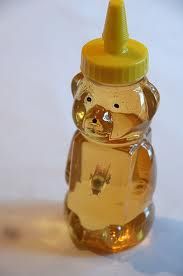
 What makes this worldwide drama unusual, other than being regarded as part of the largest food fraud in U.S. history, is the fact that honey, nature’s benign golden sweetener, is the lucrative contraband.
What consumers don’t know is that honey doesn’t usually come straight – or pure – from the hive. Most honey comes from China, where beekeepers are notorious for keeping their bees healthy with antibiotics banned in North America because they seep into honey and contaminate it; packers there learn to mask the acrid notes of poor quality product by mixing in sugar or corn-based syrups to fake good taste.
None of this is on the label. Rarely will a jar of honey say “Made in China.” Instead, Chinese honey sold in North America is more likely to be stamped as Indonesian, Malaysian or Taiwanese, due to a growing multimillion dollar laundering system designed to keep the endless supply of cheap and often contaminated Chinese honey moving into the U.S., where tariffs have been implemented to staunch the flow and protect its own struggling industry.
Continue to read this fascinating story ...
Pawcircle for a human?
 I just wanted to write and ask for your thoughts, prayers and good wishes today. I am having surgery (total hysterectomy) and I will be in the hospital for about 3 days. The doctors will take good care of me...my family will take good care of Kelly...and then Kelly will take good care of me when I come home.
I have my blogs scheduled, so I'll still have blogs here for you to read, so please stop by. But I won't be able to visit you all for a little while. I look forward to catching up with you all again soon. And Happy New Year!
A horse is a horse, of course, of course
 In an effort to stop vets' drugs from entering human diets, the nations of continental Europe, where two million horses are reportedly eaten every year, will be enforcing a new law requiring horse owners to sign a pledge that their horses will not be eaten.
The new regulations come into force on July 1. Horses born after this date, and those born before June 30 who have not been issued a horse passport, will also have a microchip implanted.
A spokesman for the Department for the Environment Food and Rural Affairs said: "Horse passports will clearly identify those horses which are not eligible for the food chain if they have been treated with substances which are potentially harmful to humans.
Source
Photo: PA
You can catch MRSA from animals
 An infectious superbug, a strain of bacteria known as MRSA, which has evolved a resistance to antibiotics, has long plagued hospitals but in recent years has become more common in homes. About two years ago, scientists began to suspect that pets can spread this bacteria.
In the July edition of The Lancet Infectious Diseases, Richard Oehler of the University of South Florida College of Medicine and colleagues lay out the latest thinking on MRSA (methicillin-resistant Staphylococcus aureus) and pets.
The infections can be transmitted by animal bites and most threaten young children, the researchers note. "MRSA colonization has been documented in companion animals such as horses, dogs, and cats, and these animals have been viewed as potential reservoirs of infection."
"Bites to the hands, forearms, neck, and head have the potential for the highest morbidity," the scientists warn. They conclude: "Much more remains to be learned about MRSA and pet-associated human infections."
Source
Photo from Flickr, by GrahamIX

Mysterious illness affecting brown pelicans
 How sad - I love these birds!
Wildlife experts in California, US, are concerned about a mysterious illness affecting brown pelicans from San Diego to San Francisco.
Dozens of the birds - bruised and disoriented - have been landing on highways, airport runways, farm fields and house backyards.
The pelicans have been coming down many kilometres from their normal habitats.
The International Bird Rescue Research Center, which is dealing with the sick animals, says the cause is unknown.
One theory is that the birds may have ingested chemicals from fire retardants used widely by emergency services recently to tackle severe blazes that ravaged the state.
Source: BBC
Oh, this is just TOO gross!
Doctors in Arizona thought a Phoenix-area woman had a possible brain tumor, but it turned out there was something else penetrating her brain – a worm.
Doctors removed the worm and don't believe Alvarez will have any lingering health problems. No one knows exactly where she picked up the worm –- doctors said worms can come from eating undercooked pork or spread by people who don’t wash their hands after using the bathroom, according to the report.
Source: Fox News
Doctors removed the worm and don't believe Alvarez will have any lingering health problems. No one knows exactly where she picked up the worm –- doctors said worms can come from eating undercooked pork or spread by people who don’t wash their hands after using the bathroom, according to the report.
Source: Fox News
'Walter Reed' for combat dogs opens
Some 2,500 dogs are working with military units.
Like soldiers and Marines in combat, military dogs suffer from war wounds and routine health issues that need to be treated to ensure they can continue working.
Dogs injured in Iraq or Afghanistan get emergency medical treatment on the battlefield and are flown to Germany for care. Now, if necessary, they'll fly on to a new $15 million veterinary hospital for four-legged military personnel opened Tuesday at Lackland Air Force Base.
To treat the trainees and injured working dogs, the new hospital has operating rooms, digital radiography, CT scanning equipment, an intensive care unit and rehab rooms with an underwater treadmill and exercise balls, among other features. A behavioral specialist has an office near the lobby.
Source: Chicago Sun Times
(via Full Frontal Natalie)
Like soldiers and Marines in combat, military dogs suffer from war wounds and routine health issues that need to be treated to ensure they can continue working.
Dogs injured in Iraq or Afghanistan get emergency medical treatment on the battlefield and are flown to Germany for care. Now, if necessary, they'll fly on to a new $15 million veterinary hospital for four-legged military personnel opened Tuesday at Lackland Air Force Base.
To treat the trainees and injured working dogs, the new hospital has operating rooms, digital radiography, CT scanning equipment, an intensive care unit and rehab rooms with an underwater treadmill and exercise balls, among other features. A behavioral specialist has an office near the lobby.
Source: Chicago Sun Times
(via Full Frontal Natalie)
Subscribe to:
Posts (Atom)


