By Linda Cole
Anyone with a Facebook account understands the addictive nature of this social networking site. It's a place where anyone can go to meet new people (with the proper precautions), get information and find pets that are in need of homes. The site even helps lost pets that have gone through natural disasters get reunited with frantic owners who were searching for them. Facebook is helping to change the plight of pets, one animal at a time.
Natural disasters affect not only the people who experience them directly, but those of us who only witness them via TV reports and now, social media. This year's violent and deadly tornadoes have given new meaning to “keep your eye on the weather.” People who live in tornado prone states aren't taking warnings and watches for granted this year. We can't do anything about the weather, but we can help those affected by it in ways that weren't possible five years ago.
Several days after the Joplin tornado, my Facebook news page was filled with posts from people who’d found pets in a demolished home or wandering aimlessly among the rubble. I also saw a number of posts from pet owners asking if anyone had seen their pet. It struck me then that Facebook had become a sort of “bulletin board” for lost and found. This is not what we see on TV news reports. Oh sure, we get some personal stories, but we don't get the day-to-day activities that go on after a natural disaster. I gladly shared each post I saw hoping it might help reunite pets with their owners. It was my only way of trying to help. But the power of social media cannot be denied, and I know that sharing someone else's post might lead to a person who was able to help in a way I couldn't.
Rescue groups and shelters have also discovered how a social networking site like Facebook can help them reach more people throughout the country. I follow 30 or so rescue sites, and on any given day I see appeals from these groups for pets in overflowing shelters that need forever homes. It may seem like a small thing to simply click “share,” but doing so does have the potential to make a difference. Every now and then, a shelter dog or cat does find a home via Facebook.
Causes you are passionate about are easy to follow on Facebook. As with political influence, when large groups of people who are interested in a particular cause have the opportunity to join together and speak in one voice, people listen. Patrick is an abused pit bull who is lucky to have been found. His story began circulating on Facebook, and as more and more people got involved, outrage turned into action. “Patrick's Law” was started as a grassroots effort to bring about change in pet abuse laws that would make abuse a felony with stricter punishments. Whether or not this grassroots cry for justice has the power to promote change is yet to be seen, but without Facebook it wouldn’t have reached enough people and likely would have died out before it had a chance to get started.
Facebook has given a voice to regular people from around the country to address their concerns about a shelter in their area who may not be in business for the best welfare of the pets in their care. Some no kill facilities have been found to be anything but. The only way we can change how things are done is by passing the word to one person at a time. We do have a powerful voice – if we all speak up together. Pets have no voice, but Facebook is changing that.
The CANIDAE Facebook page is a great place to stay up-to-date on all the news from CANIDAE Natural Pet Food Company. You can find updates on your favorite CANIDAE dog food and treats, sponsored events and more informative articles. It's also a great place to get in touch with the wonderful customer service people at CANIDAE if you have any questions. If you have a kitty, be sure to bookmark the FELIDAE Cat Food Facebook page as well.
With the advent of social networking sites like Facebook, one person can make a difference in the life of a pet – even if that pet is thousands of miles away. A simple “share” gets important information passed along in the hope it will lead to the right person. And sometimes it does. A special deaf dog named Nico was saved because of a picture posted on Facebook.
Photo by Yukari
Read more articles by Linda Cole
Showing posts with label lost dog. Show all posts
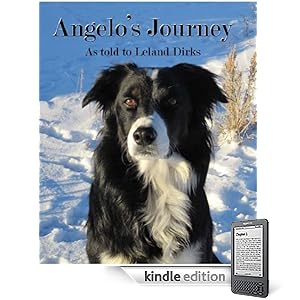
Hound of the Book Reviews #4- Angelo's Journey

Here we are with another Hou
Whenever I read a news report about the happy reuniting of a previously missing dog with its family, I always wonder about what had happened to the dog while it was away. Leland Dirks was thinking the same thing when he wrote his novel, Angelo's Journey.
Although this is a novel, there are a few true parts: Leland's beautiful border collie Angelo disappeared one day. And, after 40 days Angelo returned. What happened in the middle, and the contents of this book, are left to Leland's imagination. Each chapter is a different story, written in the first person by each person Angelo encounters along his journey. The second chapter, about the man who kidnapped Angelo, is brutal and made me sad. But the rest of the chapters are stories of all the people Angelo touched on his journey-- the truck driver, the cowboy, the waitress, and more. Interspersed are accounts of how Angelo's companion searched for him, missed him, and prayed for him. I truly enjoyed this book and agree that dogs can be angels in people's lives.
About the Author:
Leland lives in the middle of a beautiful nowhere that is Colorado's San Luis Valley. Angelo, the world famous Border Collie, and Maggie, his black Lab philosopher mix, allow him to share their off-grid home. All three tolerate The Cat who does a merely adequate job of rodent control.
Check out Leland Dirk's website.
Angelo's Journey is available on Kindle (can also be read on smartphones, PCs, Macs and ipads.)
* Enter to win a free e-copy of Angelo's Journey. If you don't have an e-reader, never fear! I read my copy of the book with a free downloadable app to my computer, and it worked just fine. Just leave a comment to be entered. For additional entries, follow this blog and leave another comment saying that you are a new follower. And/or post about this contest on twitter and leave a separate comment telling me you posted. Contest ends at midnight 5/5 and winners will be announced on Friday.
Wednesday Pet Roundup
Hi and welcome to Wednesday Pet Roundup!* Life with Dog brings us another happy story of a lost dog reunited with its family. After her terrier Charlie went missing, discover Annika's creative strategy to find him.
* This mall pet store is one you would want to patronize: UPI.com reports on Adopt-an-Shop in LA cooperates with local shelters by featuring adoptable pets in a convenient mall location.
* Employees at Amazon, Zynga, Ben & Jerry's, and many other companies, every day is take your dog to work day. From Bnet, find out why is this idea is working.
* Here's a sweet video. This is a deer guarding a goose's nest. Brought to you by wgrz.com in
Buffalo NY.
*contest: Does your dog dig up the back yard? Does your kitty shred your favorite recliner? If so, your pet may be in contention for America's Naughtiest Pet. You may win a weekly prize, or the grand prize of $100 gift basket of pet products plus $250 worth of training products to a shelter of your choice. Check out The Company of Animals' Facebook page for contest entry rules.
Why Responsible Owners Microchip Their Pets

By Suzanne Alicie
Pet identification microchips are becoming a common step for pet owners to take in order to protect their pet. A microchip about the size of a grain of rice is inserted under the pet’s skin. This is not a surgical procedure and doesn’t usually require sedation. The microchip is inserted using a large needle, into the area between the pet’s shoulder blades. Many times pet owners have a chip inserted while their pet is being spayed or neutered.
These tiny chips have unique numbers embedded on them, and the owner must register the number which will link the pet to the owner. If your pet happens to get lost, most vets and animal shelters have a scanner to check found pets for microchip numbers. Once the chip is scanned and the number is retrieved, the microchip company can be called and given the chip number. With the chip number it is easy to look in the database and find the owners information in order to get the pet back home safely.
If you travel with your pet, either by air or by car, it is always a good idea to have a microchip implanted in them. Between airline mishaps, and pets that run away at rest areas, the chance of becoming separated or losing your dog or cat while traveling are fairly high.
If your pet is an indoor only animal, you might think there is no need for a microchip, but many times indoor cats and dogs may not wear a collar or tags all the time. This means if something happens and your pet slips out the door, he has no identification to separate him from the other strays that are picked up. With a microchip you stand a much better chance of getting your pet back safe and sound.
You might think that this much technology packed onto a tiny chip implanted in your pet would be expensive, but you may be surprised. The insertion fee varies from vet to vet, but generally costs between $30 and $50. Registration with a microchip company is usually a onetime fee of around $20. There may be an additional fee if you need to change the information at a later date.
There are several microchip companies to choose from, but the two most widely used in the United States are Home Again and AVID. No matter which microchip company you choose, any scanner will indicate the presence of a chip whether it can read the chip or not, so once someone finds your pet and determines that a chip is present it is simply a matter of using a different scanner to read the chip. Additionally, some microchip companies now produce universal scanners and provide them to animal shelters and animal control agencies at no or very low cost.
These microchips often make the news when they help reunite a lost pet with their family, sometimes after many years of being apart. Such was the case recently for a cat named Shusha, who had gone missing and ended up living in a tack room several miles from its home. The woman who owned the tack room took Shusha to the vet to have her scanned for a microchip. Because of the presence of a tiny piece of technology, the Johnson family was reunited with their beloved cat after 3 long years.
The many pleasures our pets bring into our lives make the small expense of inserting a microchip a worthwhile expenditure. Microchipped pets that accidentally become lost are much likelier to be quickly reunited with the family who loves and misses them.
Read more articles by Suzanne Alicie
Labels:
canidae,
lost dog,
micro chip,
responsible pet ownership,
Suzanne Alicie
What to Do When Your Dog Gets Loose

By Ruthie Bently
As a responsible pet owner you never want anything to happen to your dog, but what about those times you have no control over? We have a fenced yard for Skye, but accidents sometimes happen. A delivery person drops off a package and forgets to close the gate or Steve goes to work and forgets to latch it. Like most dogs, Skye loves to play and go for walks and car rides; an open gate is a different matter altogether.
To a dog an open door or gate means freedom – real freedom, not the kind of freedom they get at the end of a leash or at the dog park. It’s the “I'm on my own and can go where I want” freedom. All of the neighborhood smells are very enticing to dogs. The female dog in heat six blocks away or the smells coming from the neighbor’s garbage can; even the smell of something to roll in can trigger their wanderlust.
If this happens to you, what do you do when your dog gets loose? The most important thing is not to panic. You need a clear head to find your dog, and panic will only detract from you doing that in a timely fashion. Time is of the essence, don't waste it. Enlist your family and friends, as they can help you complete multiple tasks at one time. Call as many neighbors as you can, as well as any veterinary offices and animal shelters in your area. Contact the local police animal control officer and make them aware of the situation. They’ll want to know how long the dog has been missing and from where. Unfortunately, dog theft is on the rise and the more information you can remember, the better you can help the police recover your dog if this is the case.
If you have a photo of your dog, make up flyers with their picture as well as your contact information. Include your dog's name, age, gender, any scars your dog may have, whether or not they were micro-chipped or tattooed, and where they were last seen. Be as specific as possible. Get the flyers made as quickly as possible and begin distributing them. Make sure to get copies to the vet offices, shelters and police departments you contacted, as well as your neighbors. If there is a grocery store or mall nearby, ask the store owners if they've seen your dog or if they will put your flyer in their window. If you know which direction your dog went, take flyers, a leash, spare collar, dog treats and their favorite noisy toy with you. Get in the car and begin driving in that direction. Make sure you leave someone at home to man the phones in case your dog is found while you are out looking.
The best thing to do is to be prepared. If you have a plan in place before your dog becomes lost, you can accomplish finding them that much faster. Have a current photo of your dog taken and update it every six months. Write down a detailed description of your dog. Include the information mentioned above, as well as your current contact information. Make sure your dog's identification tag has your current address and phone numbers on it. You may want to have another family member's phone number on it as well. Take your dog for a walk in the neighborhood and stop and introduce yourself and your dog to the neighbors. Your neighbors will be less afraid of a strange dog wandering the neighborhood if they have already met it in person.
Consider a GPS collar for your dog. There's a company in Minnesota that manufactures one that you don't need a cell phone or monthly subscription to be able to use. It has a hand held GPS system that uses current satellite technology to find your dog. If your dog is not microchipped or tattooed, you might want to consider that. Shelters are required by law to have a microchip reader, and many dogs have found their way home due to this technology. Many veterinary offices also have chip readers and if a stray is brought in they'll do what they can to return your dog.
No one that lives with a dog ever wants to be separated from them. The emotions we feel for our canine companions run as deep as those for a human family member. By being prepared you can help bring your beloved dog home quicker, and the reunion will be that much sweeter.
Read more articles by Ruthie Bently
Labels:
canidae,
dog treat,
lost dog,
responsible pet ownership,
ruthie bently
What To Do With a Stray Dog

By Ruthie Bently
Has this ever happened to you? You’re traveling on a country road, a busy interstate or even at your favorite store and you see a dog without their human owner. What do you do? First of all, if you decide to approach this dog, do so with caution. You don’t know how long it has been on its own, and it may have been traumatized by its experience. Though this may be someone’s four-legged baby and might be the most wonderful dog in the world under normal circumstances, it has sharp teeth and could be frightened by what it has been through so far.
A biscuit or a food item may be a good thing to have in your hand, as this will distract their focus and may also endear you to them. You should check to see if the dog has a collar, and hopefully tags as well. You can also check with any neighbors in the area to see if anyone has lost a dog. If you are uncomfortable taking the dog home, then contact the local animal shelter or humane society. Sometimes these are linked to the police department animal control unit. If you want to take the dog home, you should still contact the local shelter or humane society to let them know you found a dog. Giving them as complete a description as you can is important, as this will facilitate getting the dog home sooner.
If you take the dog home with you, they should be provided with food, water and a safe place to rest. Check the local papers every day for listings of a lost dog, as well as with local veterinarians. You can either keep the dog until the owner is found or take them to the shelter after 24 hours. However, if you take the dog to the shelter, check to see what their policies are on euthanasia as some have a seven day limit for keeping lost pets. Ask if they are a “no kill” shelter, and what will happen to the dog if they are not reunited with their owner within a week.
Do your best to make sure the dog gets home by hanging flyers, and place an ad in the local paper (many local papers offer free “found dog” ads). Also make sure the information gets to your local police department and vets, as well as those in the town where you found the dog (if it’s a different city than yours). Many dogs are micro-chipped now, so check with your local shelter or vet to see if they have a universal chip reader. This may also get the dog home sooner.
I had an interesting experience with a lost dog once. Though it took a bit of ingenuity, I was finally able to reunite the dog with his owner. It was early one Sunday morning at the store where I worked as pet department manager. A customer came in and mentioned there was a German Shepherd sitting by the front door. I went out to see the dog; it was waiting patiently so I thought he was waiting for his owner to come out of the store. He seemed friendly so I gave him a pat and went back to work. Little did I know, I would become more involved in this dog’s life.
I checked to see if he had tags on his collar, and he had a rabies tag but no name tag. While this was a bit of a setback, I knew I could still find his owner. You see, the rabies tag had the phone number of the county that issued it. I called the number, and with a bit of research they were able to give me the dog’s name and told me that his rabies vaccination was up to date, even though the tag had been issued more than a year before. Unfortunately the phone number she gave me for the owner was no longer valid, as he had moved since the dog was vaccinated.
The story still has a happy ending. Because I called the county that issued the rabies tag, they were eventually able to get in touch with the owner, and he and his dog were reunited. It turns out the dog lived in Wisconsin and was loaned to a friend in Chicago while his owner went out of town. The problem was the “babysitter” didn’t realize the dog’s commitment to his owner. I am a fan of Sheila Burnford’s book “The Incredible Journey,” and this dog must have been also. He got loose one day while on an outing with the babysitter and decided to go home.
This dog had a lot of heart and just wanted to go home to the person who loved him the best. And isn’t that what we all want in the end? Bless you and yours, be they two or four-legged.
Read more articles by Ruthie Bently
Labels:
canidae,
lost dog,
micro chip,
ruthie bently,
stray dog
PPOM Helps Reunite Lost Dog with Family
We got a call two days ago from a local veterinary clinic. They told us that a Good Samaritan had found a dog and brought it to the clinic because its vaccination tags were from their office. They had tried to call the owner of "Rocky", but his number was disconnected. The only other information they had was from us, as the PPOM program had paid for vaccinations for the dog in 2008. We began to do some research and found that the dog had belonged to a patient of ours, who had passed away several months ago. We tried to call the numbers we had for the patient's spouse, to no avail. All the numbers we had were disconnected, too. After checking the patient's chart, we found the number of another relative and we called her. She was very excited to hear from us. She told us that the person we were looking for, her uncle, had been placed in a nursing home. A cousin and her husband had moved into the family home and changed the phone to their name. They had also adopted the family dog and had been searching desperately for him since a thunderstorm four days previously. She gave us the number and we called her cousin to tell her where "Rocky" was waiting. She began to cry. "I love that dog so much!" she said. "He is all I have left of my mother. She loved him, too." She thanked us through her tears for being so persistant. We thanked her for letting us be a part of a happy ending for her and "Rocky."
Subscribe to:
Posts (Atom)