Showing posts with label AKC. Show all posts

A Six-toed Puffin Retriever


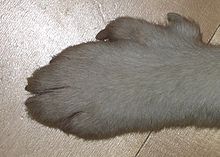
Kelly wanted to introduce you today to a special breed of dog, newly recognized by the American Kennel Club...the six-toed Norwegian Lundehund!

According to the American Kennel Club, this dog is:
*medium sized
*black-tipped fur
*able to fold close its ears
*able to turn its head 180 degrees, so that it's chin touches its spine!
*able to turn its feet out sideways (to hunt Puffins, of course)
*oh yeah, has 6 toes on each foot


How to Find Reliable Pet Information Online

By Suzanne Alicie

In this day of instant satisfaction and technology, a responsible pet owner can find the answer to just about any question online. But how will they know if the information is reliable? After all, you don’t need to have a degree to post something online about animals. All sorts of people offer their experiences and answers to pet questions on message boards, social networks, websites and blogs. There are a few ways to make sure that you are finding legitimate and reliable pet information online. When it comes to questions about our pets’ health and wellbeing, it’s important to use common sense and seek out reliable sources.

Ask Your Vet

Your veterinarian can direct you to reliable online sites for pet information. While this isn’t necessarily proof of a certain site being a good source, it is a good endorsement. Of course, information gleaned online should never take the place of your veterinarian.


The American Kennel Club

When you are looking for reliable breed information, the AKC is a reputable organization with a good website.

The ASPCA and Other Reputable Rescue Organizations

Again, asking your veterinarian to recommend a website before you count on it for pet information is wise, but in general the ASPCA and reputable rescue organizations have helpful websites, and can refer you to other reliable pet information sites.

Your pet loving friends may recommend certain websites for information and ideas for dealing with your pet, either related to behavior or health concerns. Feel free to check them out, but verify any information you receive with your veterinarian before you take any action.

Many websites and blogs online are owned by responsible pet owners who have nothing but good intentions, but in fact the only person who should provide treatment information for your pet is your vet. Training and behavior suggestions and helpful hints for bathing and grooming your pet are generally safe to use, and often common sense will tell you whether the idea is a good one or not.

Exercise Extreme Caution

Online information can be misleading and cause damage to pets. My dog had developed a small lump on her belly. It was hard and about the size of a nickel. The vet told me to keep an eye on it and bring her back if it changed drastically. For nearly a year the lump didn’t change. When it began to grow, the vet checked it and tested it. The result was that the tumor was benign and probably just a fatty tumor; not a problem unless it bothered her because it was growing so slowly. While I trusted my vet, I also wanted to know more about these tumors. So I went online to do some research.

The sad horror stories I found about tumors that turned out to be cancerous and caused suffering and pain terrified me. I found myself measuring the lump nearly every day even though it wasn’t bothering my dog at all. I didn’t want to be a nuisance or an overprotective pet owner and call my vet over and over. The lump stayed about the same size (3-4 inches) for over a year. Two years since the lump appeared, it seemed it had stopped growing. I was relieved and didn’t worry about it for a while.

But when the tumor suddenly began to shrink, I deduced from my online searches that it was dispersing and would go away. I was so happy that it was going away. My dog had never displayed any signs or symptoms of illness, but three weeks later she was dead. Internal cells around the tumor had turned cancerous, spread to her internal organs and had ingested the fatty tumor quickly.

It was a relief when the vet told me that by the time the tumor had begun shrinking it was already too late, but I still felt as if I had failed my dog by not recognizing the dangers, by not being more proactive and questioning the vet with all of my worries sooner. By believing when online websites told me that fatty tumors that were benign could dissolve into the body, I was feeling relief and assuming it was a harmless fatty tumor while my dog was riddled with cancer.

Be very cautious what you look up online and what advice you follow. Always make sure you verify everything with your veterinarian, and don’t ever be afraid of being a worrywart – because it could very well save your pet’s life.

Photo by Dome Poon

Read more articles by Suzanne Alicie

Why is the American Kennel Club Important?

By Linda Cole

The American Kennel Club (AKC) was established on September 17, 1884, with the adoption of a constitution and by-laws. One delegate from each of the 12 active dog clubs that had recently held a bench dog show or field trials, met in Philadelphia to discuss forming a sort of “club of clubs.” The National American Kennel Club had already been established in 1876. With a need for a reliable stud book in the U.S., the AKC combined their records with The National American Kennel Club's Stud Book, which was published in 1878 for a complete and thorough record of a dog's pedigree (male and female) for all registered purebred dogs in America. Westminster Kennel Club was the first dog club to join the AKC and is the only remaining member of the original 12 dog clubs that established the club. The AKC has been responsible for maintaining written documentation of purebred dogs in this country ever since; however, the AKC does more than just keep records.

The American Kennel Club is a nonprofit organization with the largest registry of purebred dogs in the world, and is responsible for the rules and regulations for more than 20,000 AKC-sponsored events every year. The Westminster Dog Show is one of the AKC’s more famous events, but they also oversee events in other conformation dog shows, rally, lure coursing, hunting tests, field trials, agility, herding, tracking, obedience, coonhound events, and earthdog tests. The AKC’s mission is to be an advocate for purebred dogs as family companions, to advance dog health, to be a champion for the rights of all dog owners and promote responsible dog ownership. The AKC is responsible for the integrity of the Stud Book, and promotes dog sports and dog breeding to make sure breed standards are maintained.

The AKC does not certify breeders or have the authority to shut a kennel down for non compliance of their rules or refusing to let AKC inspect their kennel. “AKC-registered” doesn't mean the puppies or dogs are of a higher quality than dogs not registered. It only means the dog's parentage has been recorded. Random inspections of breeders are done yearly by the American Kennel Club to make sure the dogs are receiving proper care and have acceptable living conditions, and to ascertain that breeders are keeping accurate records.

The AKC Canine Good Citizen Program was started in 1989 to promote responsible pet ownership and give dogs with good manners their just rewards. The purpose of the program is to help people understand that even in the home, a well mannered dog who gets along with other dogs and people is much easier to live with.

AKC CAR. Since 1995, the Companion Animal Recovery has been providing microchips at an affordable cost to pet owners for protection if their pets ever become lost or stolen. Proceeds from the sale of the microchips go to support scholarships for Veterinary school, canine support, disaster relief and other causes.

DNA testing. Field agents from AKC's Investigations and Inspections Department take DNA samples from randomly selected breeders during an inspection of their facilities. The agents use a swab to swipe the inside of the dog's cheek. The testing helps the AKC verify that information provided by the breeder is accurate and the pedigree of the puppies has been correctly documented. DNA tests are required under AKC's Frequently Used Sires requirement for any dog that is listed as the father in seven or more litters in his lifetime or is documented as the father of more than three litters in a year. The American Kennel Club has the largest database of DNA profiles of dogs in the world.

AKC Canine Partners Program. In 2009, the AKC began allowing owners of mixed breed dogs to register their pet with them. After the dog has been registered, he/she is then eligible to participate in AKC-sponsored events around the country in obedience, agility and rally trials.

The American Kennel Club was started by a group of men who were passionate about their dogs and enjoyed the sport of hunting. Throughout the history of the AKC, this organization has been a strong and dedicated advocate for purebred dogs and for their continued good health through responsible breeding. The goal of the American Kennel Club has always been to register and maintain an accurate lineage of all purebred dogs for excellence in all of the breeds we know and love.

Read more articles by Linda Cole

The Advantages of Belonging to a Dog Club

By Linda Cole

Dog events are held around the country every year, and they are all sponsored by a dog club. Whether it's an event in obedience, a conformation dog show, agility or field trials – it was organized by a dog club. Even if you have never participated in a sponsored event, joining a dog club is to your advantage and may even inspire you to enter your dog in one of their events.

Before joining any dog club, you must first decide what it is you want from one. You can find a variety of dog clubs, each with their own area of interest, and not all dog clubs are AKC sponsored. Clubs are for people and their dogs who share a love for a specific breed, or an enthusiasm for hiking, surfing, field trials, agility, obedience and many other interests. The one thing they all have in common is a love for dogs and an activity the members are interested in. Some dog clubs have a relaxed atmosphere while others are more demanding and want the dogs to be well behaved. It depends on the individual club, so you need to understand what's expected before joining one. However, all clubs expect dogs to be socialized with other dogs and people.


Advantages of Dog Clubs

Dog clubs hold around 5,000 events each year sponsored by the AKC. If you're interested in earning points for your dog, these are the types of dog clubs that would fit your needs. AKC sponsored events are more structured and regulated by rules, but if you want to get into showing, agility, herding or field trials, and you are serious about promoting and improving your dog's performance, this kind of dog club would be a good choice. Dog clubs can give you networking opportunities, advice and possible contacts.

Another advantage of belonging to a dog club is that it gives you access to a lot of different people and dogs. It's a great place to take a new puppy to help him learn proper socialization skills. You will meet people who can help you learn the ropes if you are just getting into showing, competing in agility, or any other activity. You can find a huge amount of expertise at a dog club, and most people are happy to help a fellow club member out. Plus, it gives you quality time with your dog in an environment where everyone loves dogs.

Many dog clubs visit schools to help teach kids about responsible dog ownership. It's an opportunity to introduce kids to different breeds, so they have a chance to meet a well mannered dog regardless of what his breed is. Clubs have had good success promoting responsible pet ownership, and if this is something you might like to get involved with, a dog club is the place to go.

Joining a Dog Club is Easy

Once you've found the right club, you will need to fill out a membership application and pay a small membership fee. Some clubs may require someone to vouch for you or have one of their members sponsor you, but not all clubs have this requirement. Don't be afraid to ask questions so you know what you need to do. Once you've been notified of your acceptance into the dog club, you can then participate in club sponsored activities and events, attend meetings and vote. Most dog clubs give you discounts on entry fees for planned events, training sessions, seminars and classes.

Belonging to a dog club does have responsibilities. As a member, be prepared to jump in with both feet and volunteer to help out at sponsored events or share your expertise with others. It's always good to attend monthly meetings so you can stay abreast of what's going on and add to any discussions taking place that are meant to make the club better for everyone. Learn what their rules are and make sure to follow them.

You can find dog clubs for every breed and any activity you can think of, and probably some you've never even heard of. If you're interested in joining a dog club, go to some of their events first to see how they are run and if it's a club you would like to join. It could turn out to be the best thing you've ever done for you and your dog.

Photo by Boxercab

Read more articles by Linda Cole

What is a Conformation Dog Show?

By Linda Cole

If you want to see a good representation of purebred dogs looking their best, a dog show is the best place to go. A conformation dog show is considered to be a beauty contest, but there's a lot more to it than that. The dogs are well trained, and each one is an ambassador representing their breed.

The recent showing of the National Dog Show on Thanksgiving and Westminster Dog Show are good examples of conformation shows. These are benched shows, which means people attending are allowed to mingle with the dogs backstage and talk to dog experts who can answer their questions. Both shows are nationally televised, but conformation dog shows take place across the country all year.

Most conformation dog shows in the United States are sponsored by the American Kennel Club. Any show outside the U.S. may be run according to the standard set forth in the country where the show is held, or it can be run according to the standard provided by the FCI (Federation Cynologique Internationale, an international federation of kennel clubs established in 1911.) The FCI sanctions the World Dog Show which is shown every year in a different host country.

What we see when watching a conformation dog show are well groomed dogs on their best behavior, but what a judge sees are dogs exemplifying the best in each of their breed standard. The dog shows we watch on TV feature top dogs who have earned the right to represent their breed by winning competitions throughout the year. Each dog is a champion who has met AKC requirements confirming them as a dog who is one of the best examples of their breed.

There are two types of conformation dog shows: all breed and specialty. Specialty shows have only one breed or one group of dogs (sporting, working, non-working, toy, hound, terrier or herding groups). All breed is just what it says; you will see dogs from each of the AKC registered breeds.

The American Kennel Club was established in 1884. Its main goal was recording and publishing a comprehensive book describing the breed standard for each breed registered with the AKC. This is also when dogs being shown were first required to be registered prior to showing. The purpose of “The Complete Dog Book” was to give judges guidelines for determining the best dog according to how well they met the standard for that breed. This book is still the guide used by a dog show judge to base their decisions according to how they interpret what the standards are for the breed they are judging.

Dog show judges look at the dog's appearance, body structure, shape of the head and eyes, proper bite, how the dog moves (his gait) and if the dog is able to perform the task he/she was bred to do. When the judge views each dog from the side, they are looking at how the dog stacks (a dog's stance that shows off particular attributes of the breed). The familiar stance we see from a German Shepherd in the ring is the expected stack for that breed. When a dog meets conformation, this means they conform to the ideal breed standard. A judge's decision is based on what the perfect dog looks like according to the breed standard.

A conformation dog show may be thought of as a beauty contest, but its purpose is to show off breeding stock. Dedicated breeders are passionate about and take great pride in the purebred dogs they raise. Because of the work responsible breeders do, dogs produce healthy litters that will carry on the best of their breed standard for years to come. Since conformation shows are meant to show off breeding stock, altered dogs are disqualified from competition.

Competing in dog shows is an expensive hobby, but it's not just for the wealthy. Dog lovers from all income levels participate. You won't get rich winning Best in Show, but you will spend quality time with your dog, make new friends along the way and know your dog is as close to perfect as they can be. At a dog show, you’ll be surrounded by a family of dog lovers who are happy to help you along the way and are passionate about their chosen breed.

Every February, I watch the Westminster Dog Show. I look at my dogs sleeping beside me on the couch or at my feet and think how great they are. I've had the honor of sharing my home with purebred and mixed breed dogs and as far as I'm concerned, all of them are “Best in Show” in my house.

If you’d like to learn more about this topic, be sure to check out Ruthie Bently's article, What Happens at a Dog Show.

Photo by Ed Schipul

Read more articles by Linda Cole

What are Earthdog Tests?

By Ruthie Bently

The most cited definition of an earth dog is “a dog that will dig in the earth, or enter holes of foxes, etc.” Earth dogs were originally used for hunting food for the table or vermin, and were bred to track badger, otter, weasels and other quarry to their den. At an Earthdog Test or Den Trial, a dog is competing against themselves and their own natural ability to hunt when confronted by an underground hunting location.

Earthdog is a newer sport based on an old practice. There are several dog breeds that have been used for many years for this purpose. It is now a recognized competition by the American Kennel Club (AKC), the Canadian Kennel Club (CKC) and the American Working Terrier Association (AWTA). Called both “Earthdog Tests” and “Earthdog Den Trials,” their purpose is the same – to test your dog’s natural instinct and trained ability to work and hunt a quarry after they have “gone to ground.”

The CKC allows eligible dogs to be born both inside and outside Canada, as long as they meet required criteria. The CKC recognizes a Certificate of Gameness earned at an AWTA event and it can be recorded on a dog’s CKC pedigree.

The American Working Terrier Association, founded in 1971, believes that terriers and dachshunds should have the ability to be working dogs and used for their original purpose. Their goal is to encourage breeders to retain certain terrier instincts that each recognized breed is known for. A dog can earn a “Certificate of Gameness” if they score 100% in an open class.

To compete at an American Kennel Club Earthdog Test, a dog must be at least six months old, registered with the AKC, or be a purebred assigned an ILP (Indefinite Listing Privilege) number. A dog entered in an AKC Earthdog Test may be spayed or neutered. While the AKC, AWTA and CKC recognize several breeds eligible to compete in Earthdog Tests, each organization’s rules and regulations are different. You should check with each organization to determine your dog’s eligibility.  

A dog’s performance is timed from when they are released by their handler, and once the dog reaches the quarry they must stay there for a pre-set time. A dog’s time and their performance are rated by a panel of judges, who then award the dog a score.

Earthdog Tests are based on pre-determined criteria, and each certification contains more extensive testing. The AKC has five certifications a dog can earn in Earthdog. They are: Introduction to Quarry, Junior Earthdog, Senior Earthdog and Master Earthdog. The definitions for these certifications and certificates for the CKC and the AWTA are available on their websites.

Each dog is rated on how long it takes them to follow a scent line and find the opening of the tunnel, and how long it takes to make their way into and traverse the tunnel and reach the quarry. A dog must be able to follow the quarry’s scent down a man-made underground tunnel, and must “work” the quarry. Working the quarry can include digging, scratching, pawing, barking and staring. The encounter is controlled and the protected live quarry is not harmed.

Does your dog love to dig holes in your yard for fun and exercise? If you’d like to help them burn off some of that extra energy, you may want to attend an Earthdog Test to see if it’s a sport you would like to compete in with your dog.

Photo by Tup Wanders

Read more articles by Ruthie Bently

Could Your Dog Ace the “Canine Good Citizen” test?

By Julia Williams

Having a well-trained feline is not something most cat owners care about. Not because cats can’t be trained – they certainly can – but it’s really not necessary for everyday life. Dog owners, on the other hand, do need to make sure their canine buddy is well trained and well behaved. Trained dogs make better companions, and the training process helps you build a stronger bond with your dog.

Many pet owners use the AKC’s Canine Good Citizen® (CGC) certification program as the first step in training their dogs. Passing the 10-step CGC test ensures that your dog has good manners both at home and out in the world. Having a well behaved dog makes you a better neighbor, and makes it more likely that your dog is welcomed in your community.

What is the Canine Good Citizen program?

The American Kennel Club started the CGC program in 1989 as a way to promote responsible dog ownership and to encourage the training of well-mannered dogs. A dog and his owner (or handler) must take a short behavioral evaluation consisting of ten objectives. Dogs who pass earn the Canine Good Citizen certificate from the AKC, which some owners use after the dog's name, e.g., “Rover, CGC.”

Many other countries have developed similar programs based on the AKC’s CGC Program. A CGC Neighborhood Model has been established, police and animal control agencies use CGC for dealing with dog problems, some Therapy Dog programs use the CGC as a screening tool, and some 4-H groups use the CGC as a beginning dog training program for children.

Benefits of the Canine Good Citizen program

Working with your dog to teach the CGC skills gives you an introduction to the world of obedience training. Dogs that have a solid obedience education are more fun to live with, because they behave better in the presence of people and other dogs. Many dog owners find working with their dogs to obtain their CGC so enjoyable that they decide to explore other AKC training programs. The Canine Good Citizen program lays the foundation for all other AKC activities, including obedience trials, agility, tracking, and performance events.

Before you and Fido take the Canine Good Citizen test, you will need to sign the Responsible Dog Owners Pledge. The AKC believes this is a key part of the CGC concept, and signing the pledge means you agree to take care of your dog's health needs, safety, exercise, training, and quality of life. You also must agree to be a responsible pet owner by doing things like cleaning up after your dog in public places, and not letting your dog infringe on the rights of others.

CGC Test 1: Accepting a friendly stranger - demonstrates that the dog will allow a friendly stranger to approach it and speak to the handler in a natural, everyday situation. The dog must not show resentment or shyness, and must not break position.

CGC Test 2: Sitting politely for petting - demonstrates that the dog will allow a friendly stranger to touch it while it is out with its handler. He must not show shyness or resentment.

CGC Test 3: Appearance and grooming - demonstrates that your dog will allow being groomed and examined. Must also appear to be healthy (proper weight, clean, and alert).

CGC Test 4: Out for a walk (walking on a loose lead) - demonstrates that the handler is in control of the dog and should leave no doubt that the dog is attentive to the handler and is responding to their movements and direction changes.

CGC Test 5: Walking through a crowd - demonstrates that your dog can move politely in pedestrian traffic and is under control in public places. He should not jump on people or strain on the leash.

CGC Test 6: Sit and down on command, and staying in place - demonstrates that the dog has training, will respond to the handler's commands to sit and down, and will remain in place.

CGC Test 7: Coming when called - demonstrates that your dog will come when you call him.

CGC Test 8: Reaction to another dog - demonstrates that your dog can behave politely around other dogs.

CGC Test 9: Reaction to distraction- demonstrates that the dog is confident at all times when faced with distracting situations.

CGC Test 10: Supervised separation - demonstrates that your dog can be left with a trusted person, and will maintain training and good manners.

Who can participate?

Both purebred and mixed dogs are welcome in the AKC’s Canine Good Citizen program. Dogs do not have to be registered with the AKC or any other canine organization to earn their CGC certification, and there is no age limit for the CGC test – a dog is never too old to be a good citizen!

Local specialty breed clubs, AKC judges, 4-H leaders, therapy dog evaluators, veterinarians, vet techs, groomers, private trainers, kennel owners, animal control and police K-9 officers can all give the CGC test. You can use the AKC website to find an evaluator in your area.

Read more articles by Julia Williams

An Introduction to United Kennel Club

By Sara Chisnell-Voigt

Established in 1898, the United Kennel Club is the largest all-breed performance-dog registry in the world, registering dogs from all 50 states and 25 foreign countries. More than 60 percent of its 13,000 annually licensed events are tests of hunting ability, training, and instinct. UKC prides itself on its family-oriented, friendly, educational events. The UKC has supported the “Total Dog” philosophy through its events and programs for over a century. As a departure from registries that place emphasis on a dog’s looks, UKC events are designed for dogs that look and perform equally well.

“Total Dog” Award   

The “Total Dog” Award is just one of many things that makes UKC so special, and illustrates that function is just as important as form. In order to win a “Total Dog” award, a dog must obtain a competition win in conformation, and must also earn a qualifying leg in a performance event (agility, obedience, weight pull, or a licensed hunt) at the same event. This rewards dogs that not only shine in the show ring, but are superb athletes as well.

Conformation

UKC conformation events, or dog shows, are a little different from other registries. Since UKC is focused on family-oriented events, no professional handlers are permitted. This means the UKC show ring is much more beginner friendly, and more emphasis is placed on the dog rather than how the dog is handled and displayed. While I am not new to the dog world, I am new to the show world. However, I have learned a lot over the past year in showing conformation with UKC – the shows are very laid-back, and people are very friendly and willing to help. If you have any desire to try conformation, UKC is a great place to jump right in!

Altered Conformation

Another program I love that UKC added just this year is licensing Altered Conformation classes. This means if you have a purebred, pedigreed dog, but it’s spayed or neutered, you can still become involved in conformation. The dog can even earn an Altered Champion title. I started in conformation with my older GSP by competing in non-licensed altered classes at shows to get myself ready for my pup that I’m now showing. It’s a great way to become introduced to the sport – not everyone wants to have an intact dog, so this is a way to still enjoy the sport without that factor.

Performance Events

UKC is way more than just dog shows! More often than not, a performance event or two will be held in conjunction with the dog shows. Performance events include: agility, obedience, rally obedience, weight pull, terrier racing, and dock jumping. And then there’s hunting! UKC licenses hunting retriever tests, pointing dog trials, squirrel dog hunts, beagle hunts, and one of the largest programs at UKC: coonhound events.

Coonhound Events

Hunting with hounds is an American tradition that’s still immensely popular. UKC's competitive hound programs offer events for coonhound enthusiasts belonging to over 1,300 clubs throughout the United States and Canada. In fact, one of the UKC's series of events enters more than 17,000 coonhounds annually and ranks as the largest sporting dog event of any kind in the world! No longer restricted to down-on-the-farm family gatherings, today's competition houndsmen encompass all walks of life and professional venues. The fast-paced, head-to-head action of competition hound events provides plenty of excitement as the hound/handler teams battle it out in search of national recognition and titles. Not unlike the professional end of any sport, owners and handlers compete for thousands of dollars worth of prizes annually. In a similar fashion to the popular catch-and-release fishing tournaments, all game is left totally undisturbed to run another day.

Breed Recognition

UKC currently recognizes over 300 dog breeds. The UKC looks to the country of origin for breed standards in order to continue the vision for the particular breed. For example, I consider my “breed” to be German Shorthaired Pointers. In their country of origin, obviously Germany, black GSP’s have always been a factor in the breed, and are accepted. Other American registries consider black GSP’s a disqualifying fault, but as UKC follows the standard created and maintained by the country that created the breed, black GSP’s are perfectly acceptable. I have a black GSP that would be thrown out of the show ring in other registries but has finished his Champion title with UKC, and I’m grateful for that opportunity.

Single Registration

If you are interested in participating in UKC events and own a purebred dog registered elsewhere, you can register your dog with UKC through the single registration process. You must have proof that your dog is registered with a UKC-acknowledged registry, which varies depending on breed, but for the majority of breeds include the following: American Kennel Club, The Kennel Club (Great Britain), Canadian Kennel Club, and any FCI affiliated registry. Dogs that meet all requirements and registered through the single registration process enjoy all the same event and registration privileges as dogs born from UKC registered parents.

Limited Privilege Program

If you are interested in participating in UKC events, but own a rescue or non-registered dog, don’t fret! UKC encourages all dog owners to be active with their dogs, and in order to be all-inclusive, UKC started the Limited Privilege program 15 years ago. Limited Privilege enrollment is for purebred dogs without pedigrees or disqualifying faults, or rescue dogs and even mixed breeds. You simply complete an LP application and provide proof that the dog is spayed or neutered, and if you want the dog listed as a breed, then provide three pictures. LP dogs can enter any performance events except conformation. LP dogs are not classified separately and compete against purebred dogs in performance events. For more information, go to www.ukcdogs.com

Photo by Ellen Levy Finch

Can You Register Mixed Breed Dogs?

By Linda Cole

For decades, only purebred dogs could be registered. Now, kennel clubs around the country are opening up their doors to mutts, giving every dog his chance to shine and show off. A mixed breed dog may not have papers, but he can still run, jump, sit and run a trail with the best of them. Is there an advantage to registering a dog with mixed lineage, and what are the benefits to the dog and its owner?

Every dog lover who shares their home with a mixed breed can picture their furry friend standing in the winner's circle at a dog competition. However, the purebred dogs strutting their stuff are well trained dogs, and their trainers spent hours working with them. You can also have a well trained dog, and that's one of the benefits to registering your mixed breed dog. In order to join in on the fun, your dog has to mind his manners and it's up to you to make sure he's properly trained. All of the organizations promote responsible dog ownership to help teach owners how unique and special their mutt is.

The AKC Canine Partners Program was launched in October of 2009, allowing owners of mixed breed dogs to register them and participate in various activities throughout the country. All dogs have to be spayed or neutered before they can be registered. Vaccinations need to be up to date, and dogs need to be somewhat trained. Dogs and their owners can participate in rally trials, agility and obedience competition. Dogs can also show off their training by earning a Canine Good Citizen title. With that title under their collar, they're ready to move on to Rally Obedience, where they'll compete with other dogs and show off their agility and obedience. Rally-O, as it's also called, is an exciting event that has traditional obedience and dog agility. Signs along a course instruct the dog owner what to do and he/she then gives the command to the dog. They must do this with a clock running and judges watching how smoothly the course is run. To register your mixed breed dog with AKC's Canine Partners Program, visit their website for instructions.

Mixed Breed Dog Clubs of America is a national registry for mutts, with local clubs throughout the country. They are dedicated to providing owners and their mixed breed dogs opportunities in venues around the country. The dogs can compete and earn titles in tracking, versatility, lure coursing for sighthounds, obedience, rally, conformation events and retriever instinct. Registering with the MBDCA does require your dog to be spayed or neutered and you also have to sign a Code of Ethics promising to be a responsible pet owner and a good sport. For more information on MBDCA, click here.

United Kennel Club is the second oldest dog registry and the largest all breed performance dog registry in the world. Mutts can be registered in their Limited Privilege program which is open to any dog that's been spayed and neutered. They accept purebreds who can't qualify as show dogs because they don’t meet UKC standards, and purebreds whose pedigree can't be verified. The Limited Privilege program includes family obedience, obedience trials, dog sports, weight pulls, agility trials and a junior program to encourage kids to learn more about how to be a responsible pet owner and how to handle dogs by participating in events. For information on registering your mixed breed with the UKC, visit their website.

If you're interested in registering your mixed breed dog, but don’t know if you and your dog are up to the challenge of competing, find a local club near you and go to some of the events. You'll have a chance to meet other dog lovers who can help you get started. Registering and competing in sponsored events isn't just for purebreds. Mixed breed dogs can show just how versatile, smart, well behaved and athletic they can be. The programs are meant to help dog lovers learn responsible pet ownership by competing in fun activities with their mixed breed dogs while earning recognition and bragging rights. A dog could care less whether his lineage is mixed or pure. Being with the person he looks up to and doing things he loves are all that matters to him. Besides, competing in events is a great way to keep you and your dog in good mental and physical shape.

Read more articles by Linda Cole

Saluki, the Royal Dog of Egypt

By Ruthie Bently

The Saluki is one of the oldest known dog breeds in the world, named for the ancient southern Arabian city of Saluq, which no longer exists. The breed is known as the “Royal Dog of Egypt,” since the nobility were the only people allowed to own them. Their mummified remains have been found in the tombs of pharaohs as well as many tombs of the Upper Nile, and there are several carvings of King Tutankhamen with his favored Salukis. Some Saluki likenesses have been dated back to 2100 B.C. More recently excavated tombs dating between 7000 and 6000 B.C. Sumaria also contain Saluki carvings. The Saluki is known by other names as well: the Arabian Hound, Persian Sighthound, Gazelle Hound, Persian Greyhound, and the Tanji.

The Saluki is native to eastern Turkestan to Turkey, though due to the nomadic existence of their owners they ranged from the Caspian Sea to the Sahara desert. Historians believe they are related to the Afghan Hound and date back to Alexander the Great’s invasion of India in 329 B.C. Considered a sacred gift from Allah, they were only offered as gifts and never sold. Bedouin tribes regarded a Saluki with a white forehead patch as special, and it was believed that they wore “the kiss of Allah.”

The Saluki is a member of the Hound group; they were recognized by the AKC in 1929. Salukis may be shown in two varieties: smooth or coated (with leg feathers). Allowable colors are black and tan, grizzle and tan, golden, tricolor, white, red, fawn and cream. Males weigh between 29 and 66 pounds and are between 23 and 28 inches tall at the withers, with females being slightly smaller. Health problems may include eye ailments and cancer, and they are susceptible to sunburn. Their life expectancy is between ten and twelve years.

The first Salukis imported into England in 1840 were known as Persian Greyhounds. After seeing Salukis while on a tour of the Nile, the Honorable Florence Amherst imported the first breeding pair of Salukis from Arabia, which came from the Transjordanian kennels of Prince Abdulla. She tried unsuccessfully to improve the popularity of the Saluki for almost thirty years, and got assistance from Brigadier General Frederick Lance and his wife Gladys, who brought home two Syrian Salukis from Sarona, Palestine where he had been stationed. The Lances’ Saluki “Sarona Kelb” significantly influenced the Saluki breed. 

Salukis are equally at home in both the show ring and at lure coursing events, and have also been used as racing dogs. They are avid sight hunters and their stamina and tenacity belie their fragile appearance. Salukis can run at 40 mph in short bursts, and are not allowed off lead in some countries. They are best known for hunting gazelle due to their ability and speed over rough terrain, and they have been used to hunt hare, jackal and fox. Due to their strong hunting instincts, they may injure or kill other small pets in the home, though they may get along with cats.

Salukis do best in a fenced yard with some space to run. They should not be let off lead due to their tendency to chase what they see; once a Saluki sights prey they will give chase and will ignore commands to return. They need the equivalent of a five mile walk or run daily and since they love to run, will happily jog alongside a bike. Salukis are not recommended for apartments.

A Saluki needs a firm hand during training and does best with patience, compassion and consistency rather than severe methods. They make an obedient dog, are independent and can become distracted from time to time. They are affectionate and may bond to one family member; multiple Salukis in a household do well together. If you would like to live with a dog of truly royal lineage and love exercising, the Saluki may be right up your alley. 

Picture courtesy of Cori Solomon.

Read more articles by Ruthie Bently

Online Resources for Responsible Pet Owners

By Julia Williams

Like many people, I use the internet daily, and sometimes I wonder how I ever survived without it. The internet is extremely useful for information gathering – whatever you need to know can be found in seconds. We have a wealth of helpful information at our fingertips on proper pet care, training, health issues, behavior, nutrition and many other things that can help us be responsible pet owners. In fact, this blog is a great place to find those very things! I may be biased, but I highly recommend it for advice on how to keep your pet healthy, happy and safe. Here are some other online resources for responsible pet owners.

Information Sites

The Humane Society of the United States (HSUS) is our nation's largest and most effective animal protection organization. Their site offers pet adoption resources, helpful tips and comprehensive, well-written articles on a wide variety of pet care issues. 

The American Society for the Prevention of Cruelty to Animals (ASPCA) was the first humane organization established in North America and is one of the largest worldwide. They offer moderated discussions, articles, and Q & A columns on everything pet-related. You can also see videos of adoptable animals, and get freebies such as desktop wallpaper and a “pet safety pack” that includes a window decal and poison hotline magnet. The ASPCA also has an online store stocked with cat and dog toys, pet bowls, books, apparel and more.

ASPCA Kids is a wonderful animal-related site for children. Along with kid-friendly information on pet care, finding a lost pet and lots of different ways children can help animals, the site has cartoons, photos, fun pet facts, games, and details on animal related careers.

CatChannel.com is the sister website of Cat Fancy, one of my favorite magazines about felines. Not surprisingly, CatChannel.com is also my favorite online site for “all things cat” with news, advice, breed information, videos, photos, kitty quizzes, games, ringtones, a forum, and so much more.

Pet Adoption

Want to add a new furry friend to your family? Petfinder is a comprehensive searchable database of animals who need a forever home, as well as a directory of 13,000+ animal shelters and adoption organizations in the U.S., Canada and Mexico. The site is updated daily, and currently has around 350,000 adoptable pets listed. If you’re not looking for a pet to adopt, Petfinder has how-to videos, helpful articles about adopting, pet news, free games, contests, e-cards, widgets, graphics and the Adoptable Mutt Maker, which lets you create your own cool new dog breed!

The Oregon Humane Society in Portland has an innovative online service called Find Your Match, which helps people find the “pet of their dreams.” Borrowing a page from online dating services, the OHS database has an extensive search function that lets you look for dogs and cats with the physical characteristics and personality traits you desire. For more on this unique pet-matching service, read How to Find Your Dream Dog or Cat.

Breed Profiles

The American Kennel Club (AKC) is a great go-to site for learning about all of the different breeds of dogs. Conformation and temperament requirements are detailed for more than 150 breeds, from Affenpinscher to Yorkshire Terrier. The site also has information on breed clubs, breed rescue, dog news, and listings for AKC sponsored events such as obedience, rally, tracking, lure coursing and agility.

The website for the Cat Fanciers’ Association (CFA) offers information and insight into the world of pedigreed felines – with breed profiles and histories, breeder search, Top Cat Awards and photos, cat show schedule, and articles on feline health issues.

Traveling with Pets

Dogfriendly.com is a great site for information on places that people and pooches can enjoy together. They have listings for dog-friendly cities and resorts, lodging, beaches and parks, campgrounds, restaurants, attractions and events in the U.S. and Canada.

PetFriendlyTravel.com and its sister site, PetFriendlyRestaurants.com provides searchable listings for all sorts of pet-friendly lodging and dining in the U.S., Canada and Mexico, including hotels and motels, vacation rentals, campgrounds, resorts and spas, restaurants and even dog-friendly wineries that offer “yappy hours.”

Pet Airways is the first “pet’s only” airline where four-legged friends ride in the main cabin of the plane instead of the cargo hold. Launched in 2009, Pet Airways currently serves airports in Atlanta, Chicago, Denver, Ft. Lauderdale, Los Angeles, Omaha, Phoenix, New York and Washington DC. For more information on Pet Airways, click here to read our blog article.

Pet Sitters International is a terrific online resource for pet owners who travel. Here, you can find a qualified pet sitter to take good care of your furry friend while you’re away. The site also has lots of helpful information for pet owners on a variety of topics, such as heat stroke, disaster preparedness, traveling tips, and how to interview a potential pet sitter.

I could easily make this article go on into infinity, because the number of great websites for pet owners is astounding; I simply can’t cover them all. However, if you want to discover even more online resources for responsible pet owners, just visit your favorite internet search engine and start typing. You’ll be amazed at the bottomless pit of information available online for pet lovers.

Read more articles by Julia Williams

Dog Breed Profile: Newfoundland


By Ruthie Bently

The Newfoundland is a member of the American Kennel Club’s Working Group, and they live up to the reputation of a working dog. They are used as draft animals, for search and rescue, for water rescue, as guardians of property and families, as therapy dogs and for landing fishing nets. In their native Newfoundland they were used to haul harvested wood, carry boat lines to shore, carry lifelines to boats, rescue children, fetch items that fell overboard, supply power for the blacksmith, as a pack animal and cart puller. They are equally at home in the water or on land, and their history for water rescues are renowned worldwide. Due to their versatility in many fields, they are used in carting, agility, obedience, confirmation, drafting and water tests, and tracking competitions.

While it is thought that the breed originated in Newfoundland, from stock brought across the ocean by European fishermen, their ancestry is a bit muddy. There are many different opinions on who their antecedents were. Theories are: that they are a cross between local dogs and Tibetan Mastiffs; a descendent of a nomadic Indian dog or a Viking Karelian (a spitz type dog); or a descendent of a French Boarhound, Great Pyrenees, even a cross with a Labrador.

During World War II during blizzards in the Aleutian Islands and Alaska, Newfoundlands were used for hauling ammunition and supplies. In 1919, a Newfoundland that pulled a lifeboat with twenty shipwreck survivors to safety received a gold medal. Another Newfie is noted for rescuing 53 people from a shipwreck. They are used in Europe to patrol beaches. The Coast Guard and Navy Seals are using Newfies trained to jump from helicopters for water rescues. A woman in Janesville, Wisconsin even stated that her Newfoundland towed her stepfather’s car out of a snow drift.

Last but not least, there is mention of a Newfoundland named Rigel who may have swum in the icy waters of the North Atlantic for three hours before barking to alert a rescue ship. There is a mention of him in the book The Sinking of Titanic and Great Sea Disasters and an article in the New York Herald the day the Carpathia docked with survivors, but no other concrete evidence seems to be available. His legend is immortalized in The Legend of Rigel: Hero Dog of the Titanic, by Christine Jamesson.

There are several famous Newfies in history; even the White House was not adverse to their charms. Faithful was owned by Jesse Grant, the son of Ulysses S. Grant. Hector was owned by Rutherford B. Hayes, and James Buchanan had a female named Lara, who reportedly kept an eye on her owner by lying with one eye closed and one open for hours at a time. In the original version of Peter Pan, Nana the dog was a Newfoundland. Lewis and Clark took a Newfoundland named Seaman on their expedition. The Landseer was made famous by artist Sir Edwin Landseer, who painted many pictures of this black and white variety. Other colors allowed are black, brown and gray.

Newfoundlands have a life expectancy of between nine and fifteen years. Adult females weigh between 100 to 120 pounds and stand between 25 and 27 inches at the shoulder. Males weigh between 130 and 150 pounds and stand between 27 and 29 inches at the shoulder. They are prone to hip dysplasia and sub-aortic stenosis, a hereditary heart disease. The Newfoundland was recognized by the AKC in 1886.

A Newfoundland does best in cooler climates, as they don’t do well in hot weather. They need daily exercise, but are content to hang out at home. They do well with a job and are equally as good on land as they are in the water. They have an affinity for water and getting them a kiddie pool is a good idea if you can’t make regular trips to the beach or a lake. They can clean off a low table with one swipe of their tail and drool quite a bit. They shed profusely during shedding season, and they require regular brushing to maintain their coat quality. Due to their sweet disposition, they are good with most other animals, love children and are devoted to their family. Proper socialization and obedience training is a must. As with many other large breeds, a Newfie’s owner must be the alpha dog.

If you are interested in a remarkable, gentle giant that works well in many situations, check out the Newfoundland. If you would like to adopt a rescued Newfie see the Newfoundland Club of America’s website. You can also find information on the AKC’s website.

Read more articles by Ruthie Bently

Breed Profile: Great Dane, the "Gentle Giant"


By Ruthie Bently

I have known several Great Danes during my career as a pet care professional. I had clients that lived in an apartment with three of these “gentle giants.” A Great Dane can do well in an apartment if they get plenty of exercise at the dog park or on long walks, though I would not recommend them for everyone.

The Great Dane is the second largest dog, behind the Irish Wolfhound. A male Great Dane stands between 30 to 34 inches at the withers, and weighs between 120 to 200 pounds. A female stands between 28 to 32 inches at the shoulder, and weighs between 100 to 130 pounds. The AKC standard states “The male shall not be less than 30 inches at the shoulders, but it is preferable that he be 32 inches or more, providing he is well proportioned to his height. The female shall not be less than 28 inches at the shoulders, but it is preferable that she be 30 inches or more, providing she is well proportioned to her height. Danes under minimum height must be disqualified.”

Due to their size, there are a few things to consider before getting a Great Dane. They don’t have to jump up on a counter to surf; they are tall enough to set their head on the counter or the kitchen table. They can empty a table of its contents with one wag of their tail. Great Danes are good with children but they could knock over a small child unintentionally, so they need to be supervised with children. The size of your residence should also be considered. They won’t fit in most cars, and you need a fairly large vehicle for them to fit into comfortably. They have an energetic, friendly personality and are known for being elegant though strong. They require daily exercise, but their short coat is easily groomed. Acceptable coat colors are black, blue, brindle, harlequin, fawn and mantle.

The Great Dane is a member of the working group and was recognized by the AKC in 1887. The translation of the breed’s French name (grand Danois) means “big Danish,” though Denmark has nothing to do with their lineage. They were developed in Germany to hunt wild boar and to guard estates, and the breed is believed to be over 400 years old. Their lineage can be traced back to crosses between old English Mastiffs and Irish Wolfhounds. Drawings on Egyptian monuments from around 3000 B.C. are believed to resemble the Great Dane, and the earliest documentation of a dog resembling them dates back to 1121 B.C. in China.

I grew up reading the Sunday comics, and Marmaduke was one of my favorites. It’s drawn by Brad Anderson, who created it and it focuses on the Winslow family and their irrepressible Great Dane, Marmaduke. The movie Marmaduke (based on the comic strip) opened in theaters this past June. My definition of responsible pet ownership includes thoroughly researching a breed you are interested in adding as a member of your family. I mention this because every time Hollywood introduces a movie about a specific dog, everyone wants one. However, many of these dogs end up in shelters, because they were not the right breed for the person. After Beethoven, Saint Bernards flooded the shelters; after 101 Dalmatians it was Dalmatians, and after Beverly Hills Chihuahua it was Chihuahuas.

The Great Dane Club of America and the AKC both advised people against rushing out to get a Great Dane after seeing the Marmaduke movie. Read more about this giant breed here, and help prevent a plethora of Great Danes from ending up in shelters.

Read more articles by Ruthie Bently

Dog Breed Profile: the Loyal and Loving Samoyed


By Suzanne Alicie

When it comes to choosing a dog, most animal lovers have a list of characteristics that they are looking for in a pet. Loyal, healthy, even tempered, playful, protective, and good with children are some of the most common. The Samoyed breed meets all the requirements listed above, as well as many others.

I may have a personal bias since I have – and love – a dog of this breed, but over the years our Samoyed has proven to be an excellent pet. Originally, these dogs were bred by a nomad tribe called Samoyede in Central Asia and Siberia. While the dogs were considered working dogs with jobs such as hunting, hauling and herding, they were also considered part of the tribe’s families. The loving treatment that the tribe gave to their hardworking companions has led to the loving and loyal pets that Samoyeds are today.

Although they are an Arctic breed, the Samoyed has adapted to the warmer climates of North America, yet they still love to play in the snow. Samoyed dogs are able to live fully outdoors, even on the coldest of days, but their loving nature makes them a welcome addition indoors.

Samoyeds enjoy attention and will do whatever the need to in order to get the attention of everyone in the house, all the way down to the smallest of children. They are gentle, curious, and very energetic. The Samoyed is not a solitary dog, and will let you know that he is tired of being left alone and is bored and frustrated by destructing some of your favorite possessions. Our dog is named Chaos because she is truly a huge white ball of destruction when she is unhappy. I’ve lost books, shoes, belts and socks whenever she is displeased with me.

The AKC standards for Samoyeds indicate that males stand between 21 to 23 1/2 inches at the withers, with the female coming in between 19 and 21 inches. The average weight of a full grown male Samoyed is between 45 and 65 pounds, and the female between 35 and 50 pounds.

Purebred Samoyeds are white, cream or biscuit colored with a thick two layer coat. The dense wooly undercoat sheds out once a year, while the overcoat sheds twice yearly. Anyone who owns a Samoyed knows that they are willing to wear white hair covered clothing for a few months out of the year just to see that sweet “Samoyed smile.” If you haven’t seen a Samoyed smile, you don’t know what you are missing.

YouTube has many great entertaining videos featuring Samoyeds. These vocal pets have a distinctive plaintive howl when they want to get your attention, and a whining type growl that they use to communicate. Samoyeds “talk” and even “sing” using this growling language. You can spend hours laughing with your family at a Samoyed’s antics and personality.

Like most other large breeds, the Samoyed can develop hip problems and arthritis which can slow them down a bit. However, with proper care, immunizations and love the Samoyed can live a long and full life. Our Samoyed Chaos is nearly 12 years old and still loves to run and play, even though she has some stiffness and moves a little more slowly these days.

Read more articles by Suzanne Alicie

Dog Breed Profile: Bull Terrier


By Ruthie Bently

My heart is stuck on the American Staffordshire Terrier, but if I ever had to pick another breed the Bull Terrier would be right up there. I have a friend who has both a Bull Terrier and a Miniature Bull Terrier, though the Bull Terrier is more of the size I prefer. As their name implies, they are a member of the Terrier group and like most terriers they need a strong alpha owner.

The American Kennel Club (AKC) recognizes two colors in the Bull Terrier: white and colored. Colored means any color other than white; brindle is preferred and a predomination of white is a disqualification. Either color is disqualified if they have blue eyes. There is no specific size requirement for the Bull Terrier, though adults usually range between 21 to 22 inches at the withers and weigh between 50 and 70 pounds. The AKC describes the Bull Terrier as a dog that “must be strongly built, muscular, symmetrical and active, with a keen, determined and intelligent expression, full of fire but of sweet disposition and amenable to discipline.” The Bull Terrier has a life expectancy between ten and twelve years.

The English sportsmen of the early 1800s prized the bulldog /terrier crosses known as Bull-and-Terriers, and they were very popular. They appreciated the agility, intensity and the courage that the Bull-and-Terriers exhibited, though there were discrepancies in the dogs produced as some kept the characteristics and size of either the terrier or the bulldog. There was not yet a standardization of one dog breed.

An English dog dealer, James Hinks, is credited with the development of the first Bull Terriers. As formal dog shows were introduced and the demand for show and pet dogs grew, Mr. Hinks developed the Bull Terrier we know today. He crossed his white Bulldog ‘Madman’ and the extinct White English Terrier with the Bull-and-Terriers of the day. These dogs were known as White Cavaliers due to their snow white coats. The dogs Hinks bred were more uniform for their size and body type. Their popularity spread across the Atlantic, and the Bull Terrier Club of America was established in 1897. The colored Bull Terrier came into being after several breeders crossed colored Staffordshire Bull Terriers with their White Cavaliers. The white Bull Terrier was recognized by the AKC in 1885 and the colored Bull Terrier was recognized as an individual variety of Bull Terrier in 1936.

The Bull Terrier is a muscular, sturdily built dog. It is a plucky, fearless, active and loyal little dog that loves its owner and family to distraction. They love children but need to be taught to be careful around small children, as they can become overexcited and may knock them over in their exuberance. Bull Terriers are playful and fun loving; some can be mischievous and most have a sweet disposition.

If left home alone too long they will pine for their owner and can be destructive if not given an outlet for their energy. The Bull Terrier needs daily exercise, and either a long walk or playing ball in the yard will work well. They take well to both agility and obedience. They need to be active and this will keep them mentally as well as physically occupied. Bull Terriers are not known as barkers, so if they begin barking it is a good idea to pay attention because they are trying to tell you something.

As with most terriers this is not a dog for everyone, and I strongly suggest obedience training for a well-behaved dog. I would compare Bull Terriers to a perpetual child in the “terrible twos” stage of life. Not that they are terrible by any means, but you have to keep one step ahead of them.

Read more articles by Ruthie Bently

Dog Breed Profile: Saint Bernard


By Ruthie Bently

The Saint Bernard is named for Saint Bernard de Menthon, a monk who founded a hospice for Alpine travelers in 1049, though the first reports of their presence there date to the seventeenth century. The Saint Bernard is thought to originate from the valley below the St. Bernard pass. Through interbreeding between native dogs and Molossus dogs, the Saint Bernard was formed. It’s believed the Saint Bernard came to the hospice via the monks there , to be used as guardians and companions during the long harsh winters. Their original use by Swiss dairy farmers was for hunting, watch dogs, herders and herd guardians, and as draft animals for the farmers taking butter and milk to market.

Before their name Saint Bernard came into use in the nineteenth century, they were known as Barry Hounds or Hospice dogs, Alpenmastiff and Saint Dogs. Saint Bernards have saved over 2,000 travelers in the Saint Bernard pass during the 300 years they’ve been used by the hospice monks. They became well established for their feats in rescuing stranded travelers by 1750. The most famous Saint Bernard was named Barry. In his ten year stint at the hospice from 1800-1810, Barry rescued forty people, which brought acclaim to the breed.

The Saint Bernard is a member of the working group. The Saint Bernard Club of America, formed in 1888, is one of the oldest specialty breed clubs in the United States. Saint Bernard’s are still used to find lost travelers during snow storms, as avalanche dogs, and are shown in AKC obedience and confirmation, as well as weight and cart pulling competitions.

The Saint Bernard has two coat varieties, long and short-haired, both of which are dense and shed copiously twice a year. A friend who breeds Saints mentioned the weather has a lot to do with how much and when they shed. It is this thick coat that protects them from snow and ice, and their keen sense of smell enables them to find buried avalanche victims. Males range in weight from 150 to 180 pounds and are 27-1/2 inches at the shoulder. Adult females range in weight from 130 to 160 pounds and are 25 inches at the shoulder. Saints must be a combination of white and tan or white and brindle, and the tan color can be any shade from a light brown to a deep red.

The Beethoven movies from recent years have hurt the breed because backyard breeders jumped on the bandwagon to produce dogs like him. Like most large breed dogs, Saints can suffer from hip dysplasia. They can also suffer from arthritis and heart disease in later years. They are a deep chested breed and can be susceptible to bloat. They can also have skin conditions, tumors and eyelid abnormalities. Make sure to request a certificate from your breeder that the puppy you purchase is free of hip dysplasia. You have the right to ask to see the mother to make sure she has normal skin and eyes before you purchase a puppy.

If you are considering getting a Saint Bernard, think long and hard about it. They take extra money and extra time, so if you are a workaholic this isn’t the right breed for you. They need to be regularly groomed, especially if they spend time in the woods or fields, as they’ll come home with burrs in their coats. Saints drool a lot and my friend Jean (the breeder) mentioned that if someone could find a use for the drool they could corner the market; she mentioned it is like glue. They need a big crate and it’s tough to carry them around in a Volkswagen, so a larger vehicle is a good idea. Their vet bills will be higher because any medication will have to be adjusted to their size and their feed bills will be higher because they eat more.

Saint Bernards need obedience training for proper manners as well as sufficient exercise for their size and energy needs. If they don’t have an energy outlet, they can literally be a “bull in a china shop” and become destructive in the house. A long walk two or three times a week is good exercise, and a sturdy fenced yard is suggested. Saints are devoted to their families and demand their families reciprocate. A Saint’s devotion to its family makes it easy to train, but don’t wait too long. A Saint Bernard can be 65 pounds by the time they are five months old, so you should begin training early.

Read more articles by Ruthie Bently

Dog Breed Profile: Korean Jindo


By Ruthie Bently

The Korean Jindo is a Spitz type dog of a medium size with a double coat native to Korea, specifically the island of Jindo in South Korea. It is believed that the breed originated on Jindo Island where they were bred several centuries ago. One theory purports that they were cross bred with Mongolian dogs when the Mongols invaded Korea during the thirteenth century. They were bred to help on farms as well as to hunt, and were used for hunting deer, rabbits, wild boar and badgers. The Jindo is used in packs or individually and is prized for its hunting skills. The Jindo is different from several other breeds in that it does not retrieve or point its prey. It brings down the prey and returns to its handler to lead them to its capture.

The Korean Jindo made its first appearance in the United States during the 1980s, though it is claimed that they first appeared in France. There are currently about twenty-five Jindo dogs in Britain, and the Korean government is working to gain recognition of the breed internationally. While the Jindo is not yet able to compete in AKC confirmation events, it was approved to compete in AKC companion events in January of 2010. It has been a member of the AKC’s Foundation Stock Service since January of 2008. The Jindo has also been added to the Non-Sporting dog group of the AKC, and has been recognized by the both the United Kennel Club (1998) and the Fèdèration Cynologique Internationale (2005).

There are currently six coat colors recognized by the United Kennel Club (UKC) in the Jindo: red, black and tan, gray, white, fawn and brindle. The brindle is also known as a “tiger” pattern as the base color is fawn with either black or dark brown stripes on the fawn base; these stripes appear while the dog is still young. The residents of Jindo Island prize the black/red, black and red/white as good dogs for hunting. An adult male Jindo should weigh between 35 to 45 pounds with a height at the shoulders of between 19-1/2 to 21 inches. Adult females should weigh between 30 to 40 pounds and their height should be between 18-1/2 to 20 inches. Their life expectancy is between twelve and fifteen years.

While a Jindo has a coat suited to an outdoor climate, they should never be left outside on their own. When bored they can get into mischief and have been known to scale an eight foot fence. As with any other active breed, they would do well with several daily walks or vigorous romps in the yard, but are easy to housebreak and able to live in an apartment; however, they would do better with more room to roam as they like to investigate their area thoroughly. It is suggested that a Jindo be leash walked due to their prey drive, unless the dog is very well-trained.

A Jindo grooms itself like a cat due to its fastidious nature. The Jindo is a double coated dog and blows its coat twice a year. Brushing the coat several times a day during the shedding seasons will help rid them of this dense undercoat. I suggest brushing outside when the weather is temperate enough to do so, as the birds will benefit from the shed hairs, and it will be easier to dispose of.

In 1962 the Korean government moved to protect the Jindo. This was accomplished by declaring them as the fifty-third natural treasure of the country. After passing the Jindo Preservation Ordinance, the Jindo is now protected by the Cultural Properties Protection Act under Korean law as a national monument. It takes a formidable task to export a purebred Jindo from Korea due to their status. Because the Jindo is so highly prized, they marched in Seoul, Korea during the opening ceremonies of the 1988 Summer Olympic Games.

The reason the Jindo is so revered in Korea is due to their high intelligence, fastidiousness, courageous nature and their affection and loyalty to their masters; these qualities have also enabled it to become the most popular dog in Korea. I would not suggest a Jindo for a first time dog owner, as you need to be in control and the alpha at all times with this breed. However, for a seasoned dog owner used to owning a strong, intelligent and crafty dog, the Jindo may be just what you're looking for.

Read more articles by Ruthie Bently

Dog Breed Profile: Chinese Crested


By Ruthie Bently

The first Chinese Crested I ever met was the hairless variety, and at a distance they look as if they have been shaved to create their distinctive look. The Chinese Crested is known as a good companion dog. They like to play, are alert, agile, crave human companionship and can become devoted to their owner. It should be noted that children need to be gentle with this dog and not roughhouse – because of this breed’s lack of hair they can be injured easily. Since the Chinese Crested sheds very little or no hair, the American Kennel Club has them on its list of breeds for people with allergies.

The Chinese Crested comes in two varieties: the powderpuff and the hairless. Both the hairless and powderpuff can appear in the same litter, and the hairless variety carries the gene for both the hairless and coated dogs. The hairless is more susceptible to sunburn, skin irritations and allergies, and should be provided with a sweater in cold weather. The powderpuff reminds me of a terrier with their pricked ears and long coat.

It is said that the Chinese Crested was used by Chinese sailors aboard their ships to hunt vermin, especially during times of the plague. It is thought that the Chinese Crested was bred down to its current size from breeds of African hairless dogs. As the Chinese sailed into different ports, the dogs were traded to other sailors and merchants, and that is how the breed made its way around the world. They were found not only throughout Asia and Africa, but South and Central America as early as the 1500s.

An adult Chinese Crested should be between 11 and 13 inches at the withers (shoulders) and they should weigh between 10 and 13 pounds. Their life expectancy is between ten and twelve years. They do not need a yard and will do well in an apartment, though they are an active dog and need daily exercise. Playing can take care of their need for exercise, but it is no substitute for a walk every day. The Chinese Crested is not known as a barker, but they like to climb and dig holes. They are intelligent and able to learn tricks easily, and are usually good around other pets. They should to be socialized and need to know that you are the leader of the pack.

The Chinese Crested is a member of the Toy Group, and was recognized by the AKC in 1991. The first two Chinese Crested dogs to be exhibited in the United States were shown in 1885 in New York at the Westminster Kennel Club Show. Though they had a registry and extensive stud book that began in the 1930s, in 1965 the AKC dropped their eligibility to be shown because of low breed numbers and the lack of a national breed club. The first Chinese Crested breed club in America was established in 1979, and today they are ranked 132 by the AKC. Their most famous supporter is probably Gypsy Rose Lee, the famous stripper who began her career in burlesque. Miss Lee acquired her first Chinese Crested during the 1950s and began breeding them, which helped publicize the breed.

During the nineteenth century, the Chinese Crested began showing up in European architecture and art. There is no breeding program evidence from the period, but the Chinese Crested is also shown in pictures of English dog shows from this time. One of the most famous Chinese Crested dogs was a hairless purebred “Sam” who won the World’s Ugliest Dog Contest for three years in a row. He passed away before he could repeat his winning performance in 2006.

Read more articles by Ruthie Bently

AKC Recognizes Three New Dog Breeds


By Ruthie Bently

The American Kennel Club recently added three new dog breeds to its roster of recognized dog breeds, which brings the number of recognized breeds to 164. They are the Boykin Spaniel, the Bluetick Coonhound and the Redbone Coonhound. The Bluetick and the Redbone Coonhounds will join the Hound Group and the Boykin Spaniel will join the Sporting Group. All three breeds will be able to compete at conformation shows in their respective groups and are eligible for full registration in the AKC.

The Boykin Spaniel was developed in South Carolina where it is the official state dog. Mr. L. Whitaker Boykin is responsible for developing the breed in the early 1900s for hunting wild turkeys after he found that the dog had a natural talent for it. Boykin was introduced to the original dog that was the forerunner of the breed by his hunting partner Alexander White. White found the dog wandering near his church in Spartanburg, South Carolina, took him home and named him Dumpy. After spending considerable time with Dumpy and feeling that he would make a good hunting dog, White introduced him to Boykin who undertook his formal hunting training. Nowadays this breed is primarily used for hunting ducks and other waterfowl. The Boykin Spaniel has an energetic, cheerful personality and is a medium-sized breed. Because they have the stamina to do a full day’s worth of work, they do well with a family that is active. They love human companionship and do well with other dogs and children. Their coat is a chocolate brown color.

The Bluetick Coonhound, like most coonhounds, is so named because of its coat color, which is dark blue in color and has a mottled or ticking pattern. It is thought that the Bluetick is descended from the English Foxhound and French Staghound as well as the English Coonhound, a fast working dog that excels at following fresh game trails. In 1945, the Bluetick breeders broke away to create a dog that was a slower worker and able to follow older scent trails. They were very proud of this larger, slower, determined hound and maintained the hunting style that the breed is famous for today. Active sporting families prize the Bluetick for their determination, steadiness for staying on a very intricate track, endurance and working ability. They have the typical coonhound “bawling” bark and are skilled in trailing and treeing raccoons and other small animals. The mascot for the University of Tennessee is a Bluetick Coonhound named Smokey.

The last dog of this new group to be recognized by the AKC is the Redbone Coonhound. This breed is descended from red foxhounds brought from Scotland by immigrants in the late 1700s and also imported from Ireland before the start of the Civil War. Redbones are known for their bright red coat, which is how they got their name. Like the Bluetick they are known for their instinctive ability to tree game and are versatile enough to have been used to hunt game from the size of raccoons to cougars. They are good at swimming and hunting over varied terrains and are able to maintain their agility and speed while doing so. The Redbone lives for pleasing their owner and is trainable in a household situation as well as being an even-tempered dog. The author Wilson Rawls featured a Redbone Coonhound in his book Where the Red Fern Grows.

Read more articles by Ruthie Bently

Tips on Finding a Reputable Breeder


By Ruthie Bently

If you’re looking for a new dog or cat and want a purebred, do you know what to look for? Do you know which questions you should ask to help you choose the right pet? If you’re not sure what breed you want, going to a dog or cat show is a great way to find out. At a show you can look at the different breeds, talk to the breeders and find out if a pet you are considering would be a good fit for you. If you have already decided on a certain breed of dog or cat, finding a reputable breeder is fairly easy. The best advice I can give you is to remember to do your homework.

Don’t buy a particular breed simply because your children are begging you for the dog they saw in a movie. You need to make sure that the breed you choose is going to fit into your family and your lifestyle. Many Dalmatians ended up in shelters after the 101 Dalmatians movie came out because people found out that they didn’t have either the patience or energy to keep up with that breed.

Go to your local library and check out a cat or dog breed book and read about the breeds that are available. A reputable cat breeder won’t let you purchase a cat if they know it will be spending its time out in the barn hunting for its food. And no reputable dog breeder is going to let you chain one of their dogs to a dog house and leave it to fend for itself. A good breeder wants their animals taken care of; you should be aware that you are bringing home an animal for their lifetime and need to provide for them in a proper manner.

If any of your friends or family members have a purebred you like, ask them where they got it, how the pet’s health is and what they think of the breeder. Check with your veterinarian and ask them if they know of any reputable breeders. CANIDAE has links to reputable breeders on their website. You can also check the American Kennel Club website for a list of dog breeders. If you are looking for a purebred cat, the Cat Fanciers’ Association website can help.

Beware of “backyard breeders” (also called puppy mills). They breed dogs and list them in newspapers and on the Internet to make an easy dollar. The problem is they are not looking to breed a quality dog; they are breeding for quantity because the more dogs they breed the more money they make. While I have not heard much about “kitty mills” I am sure they exist. These animals can have many genetic and health issues because of their breeding, and that cute bundle of fluff you bring home can cost you thousands in vet bills down the road.

Reputable breeders can be found in the classifieds of your local paper, but they will have a list of qualifications for you; they don’t sell their animals to just anyone. They want to make sure you can take care of the pet you choose in a manner that is up to the standards they themselves will approve of. They also want to make sure you can handle the dog or cat you purchase.

Once you find a prospective breeder, there are several things you should ask them. Such as, are the parents on the premises, and can you see them? How old does your pet have to be, before you can take it home? Does the pet come with a health guarantee? (See my previous article for more questions you should ask a prospective breeder.) A reputable breeder will have requirements for you as well. Will the breeder want you to show this dog or cat? If the answer is yes, and the dog or cat becomes a champion, will the breeder want to breed the pet you have chosen?

I have had American Staffordshire Terriers since 1981. I had a personal relationship with the breeder before I ever considered getting one, and though I enjoyed all the dogs she and her husband brought into my store to socialize, I never thought I would give my life to this breed. Once I had my first one, however, I couldn’t imagine sharing my life with any other breed.

Read more articles by Ruthie Bently